
Insights on hiring, engineering, and building remote teams
Practical advice from our experience building dedicated engineering teams for startups and enterprises. No fluff, no corporate jargon.
What you will find on the Workforce Next blog
This blog is the long-form companion to our hiring work. We publish honest pieces about how to hire dedicated developers from India, how to structure offshore engineering teams, and how to ship production AI applications without breaking things. Every post is written by an engineer or an engineering manager who has done the work, not a content team.
Recent themes you can read across the archive:
- Role-specific hiring guides for Node.js, React.js, Android, iOS, mobile cross-platform, MCP server, and software testing engineers from India.
- Cost benchmarks with 2026 senior India developer salaries against fully loaded US numbers.
- AI engineering practices: OWASP LLM Top 10 implementation, RAG architecture, agent framework selection, prompt engineering in production.
- Engagement model breakdowns: dedicated developer vs freelancer vs agency, staff augmentation vs EOR vs Indian entity, short-term European projects.
- Team operating playbooks: software testing pods, mobile testing teams, Follow-the-Sun SRE, fractional project management.
We update this archive every week. If a topic you care about is missing, write to us on the contact page and we will add it to the queue.
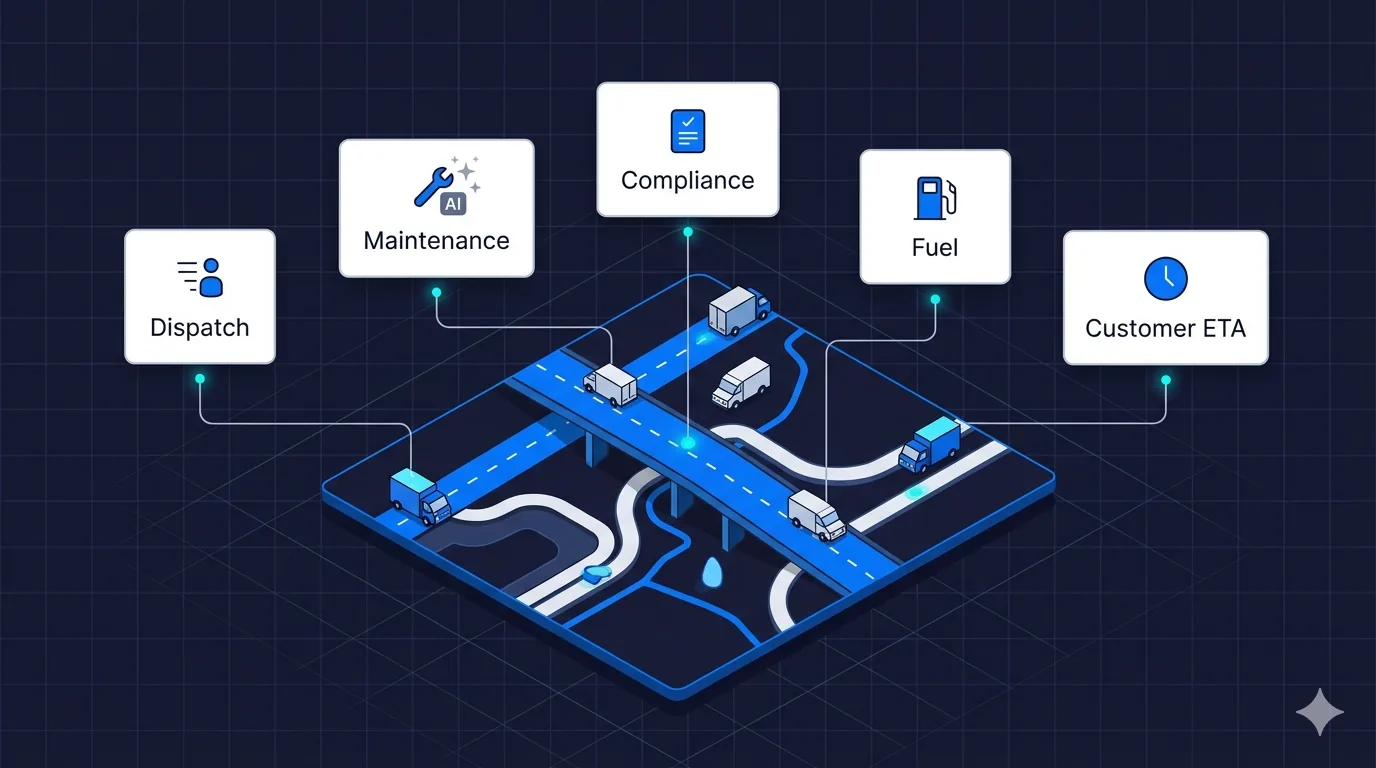
AI Workflow Automation for Fleet Companies: Dispatch, Maintenance, Compliance, Fuel (2026 Playbook)
Real playbook for fleet operators running 25 to 500 vehicles. Where AI plus n8n automation actually pays back: dispatch triage, maintenance scheduling, driver compliance, fuel reconciliation, and customer comms.
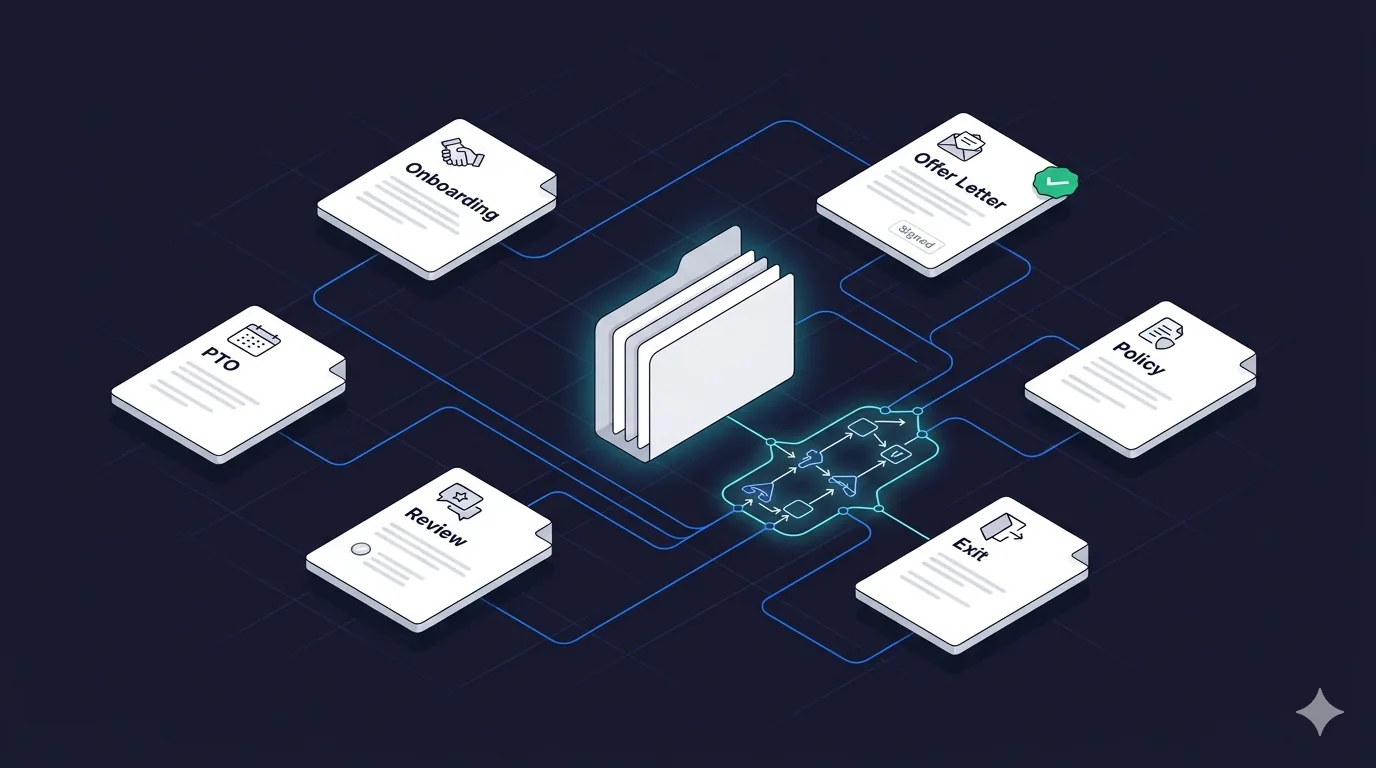
HR Document Automation for Small Businesses: 6 Workflows That Pay for Themselves (2026)
Real playbook for HR document automation at small businesses (5 to 50 employees). Six workflows that pay back inside 60 days: onboarding packets, offer letters, PTO requests, policy acknowledgments, performance reviews, exit checklists.
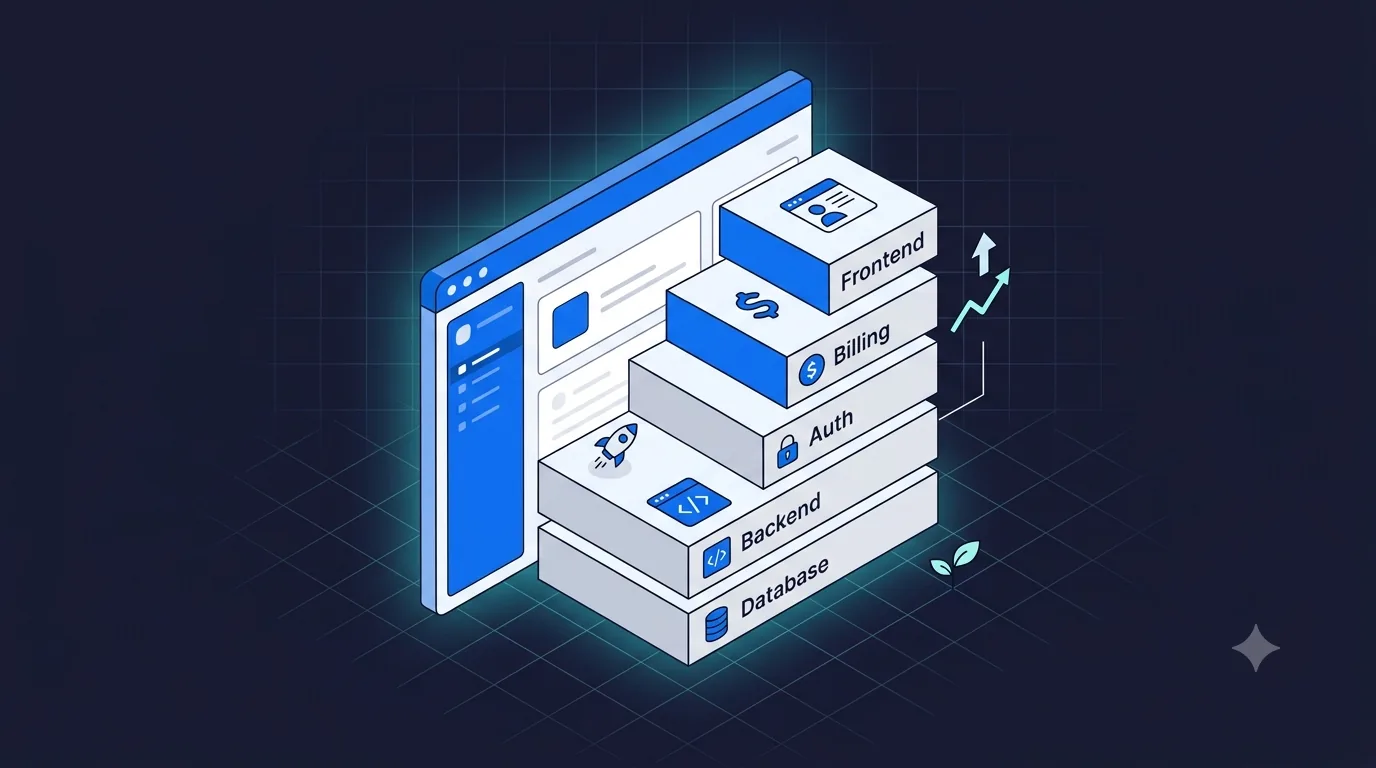
SaaS Web Application Development Guide for Startups (2026): Stack, Cost, Timeline, Team
Practical guide to building a SaaS web application as a startup founder in 2026. The tech stack that does not slow you down, realistic cost and timeline, what to build first, and how to staff it.
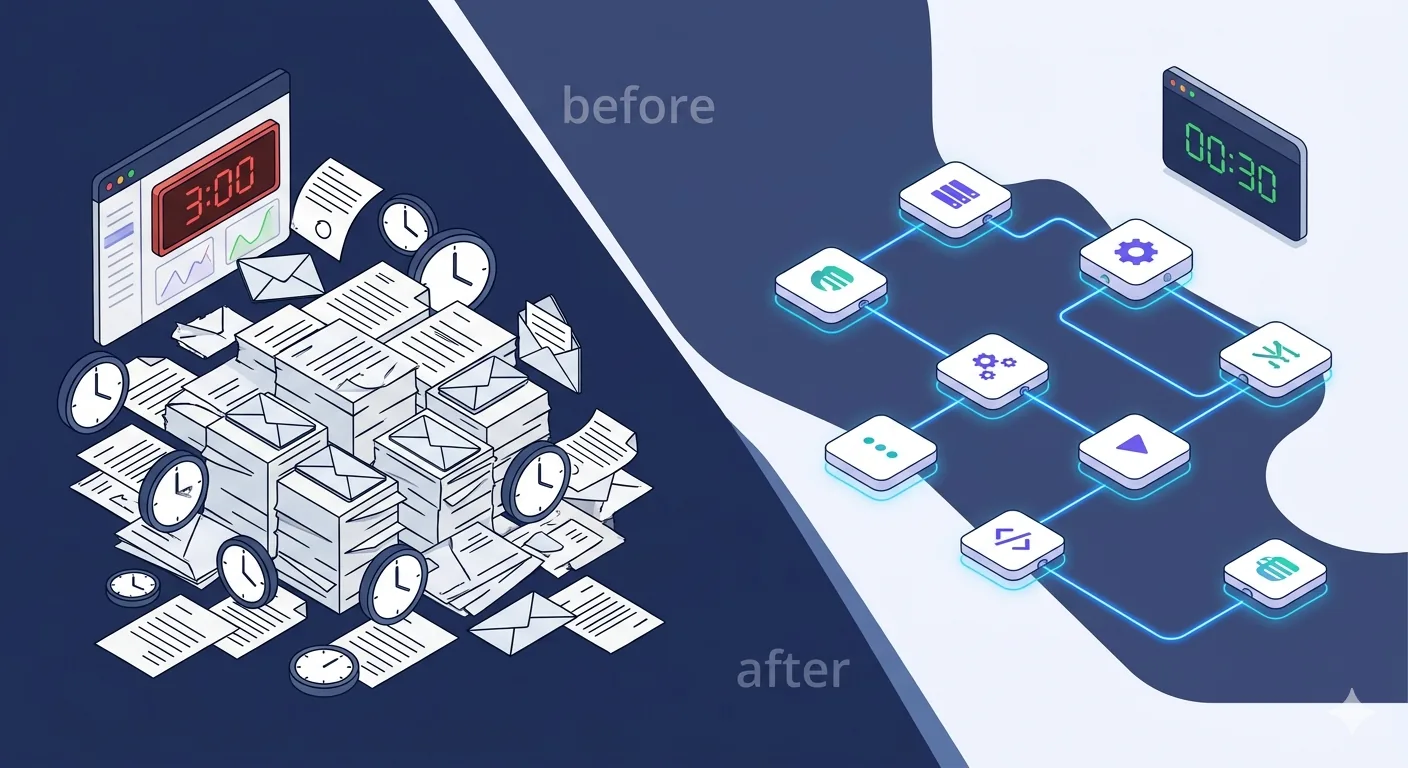
How a 50-Person US Staffing Firm Cut Recruiter Admin from 3 Hours to 30 Minutes with n8n + Claude (Case Study)
Real case study: a 50-person US staffing firm spent USD 3,000 on n8n + Claude automation and saved 72,000 dollars a year of recruiter admin time. Workflow-by-workflow breakdown plus cost math.

What Does Recruiter Admin Actually Cost Your Staffing Agency? (Real Numbers, 2026)
Recruiter admin work is the largest hidden line item in most staffing agency P&Ls. Real cost math by team size, plus the automation investment that pays it back in weeks.

10 Workflows Every US / Canada Staffing Agency Should Automate in 2026 (n8n + AI)
Ranked list of the 10 highest-ROI workflows for US and Canada staffing firms. Each entry: pain solved, hours saved per week, tools used, complexity, cost to build.
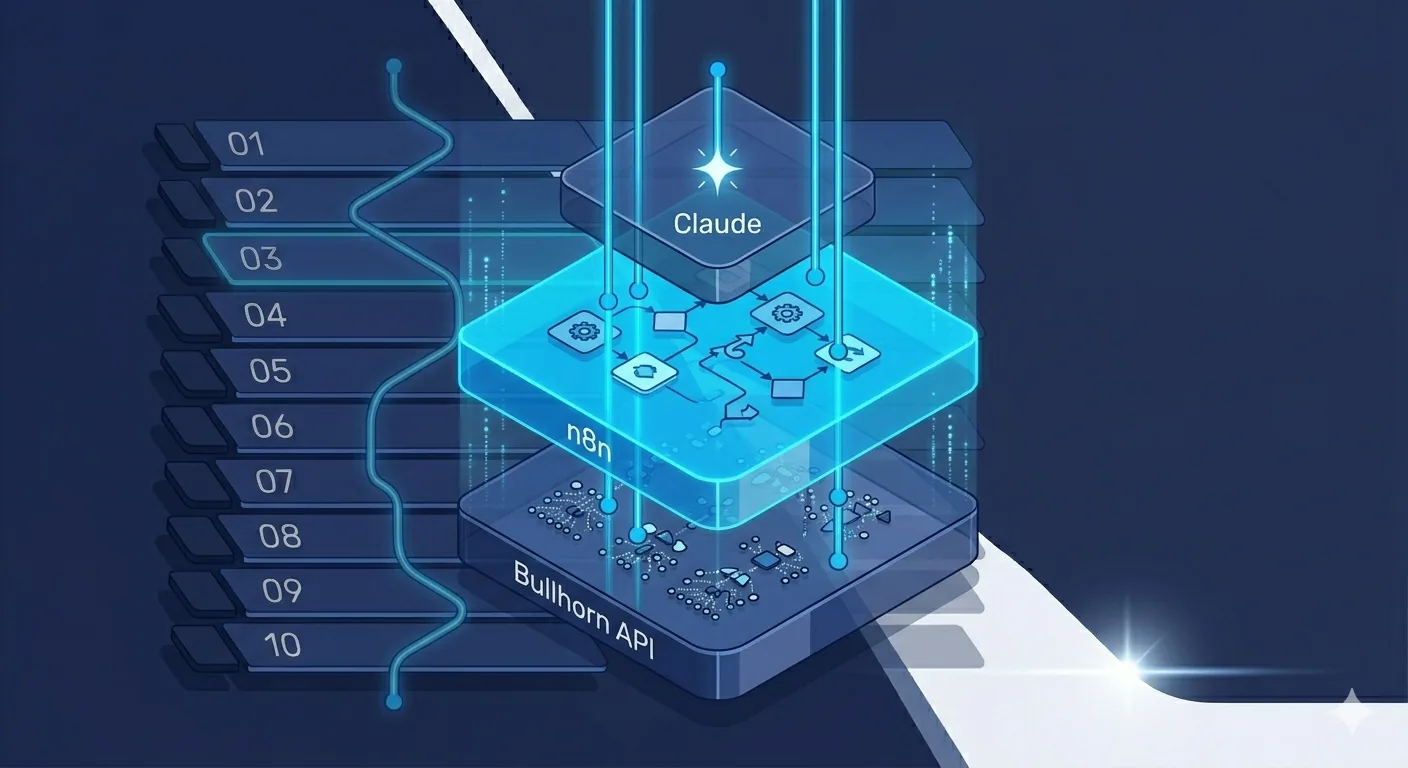
How to Automate Bullhorn with n8n: A Staffing Agency Playbook (2026)
Step-by-step n8n + Bullhorn automation playbook for US/Canada staffing agencies. API auth, top 5 workflows, rate limits, and the mistakes that break Bullhorn integrations.
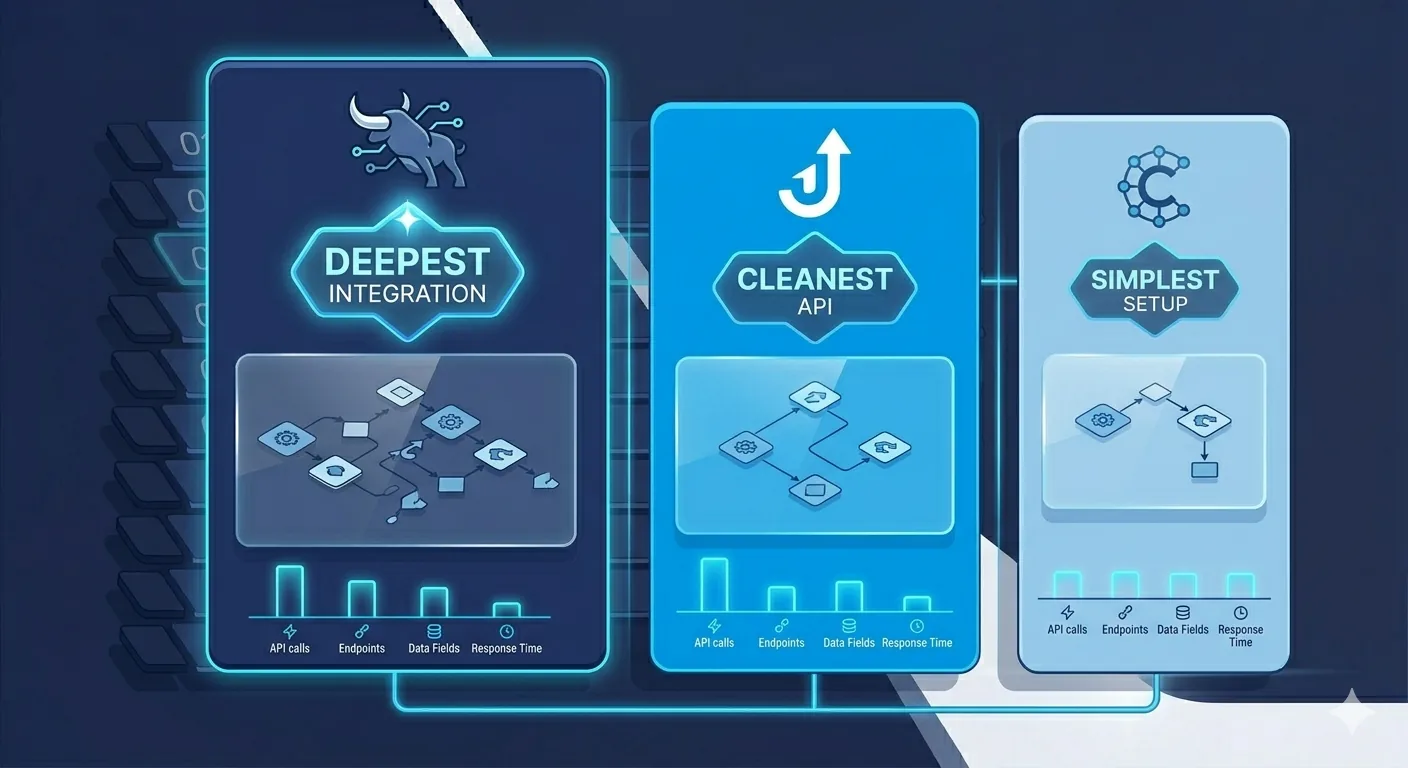
Bullhorn vs JobAdder vs Crelate: Which ATS Automates Best with n8n + AI (2026)?
Honest 2026 comparison of Bullhorn, JobAdder, and Crelate from an automation perspective. API quality, webhook reliability, rate limits, n8n compatibility, real-world build experience.
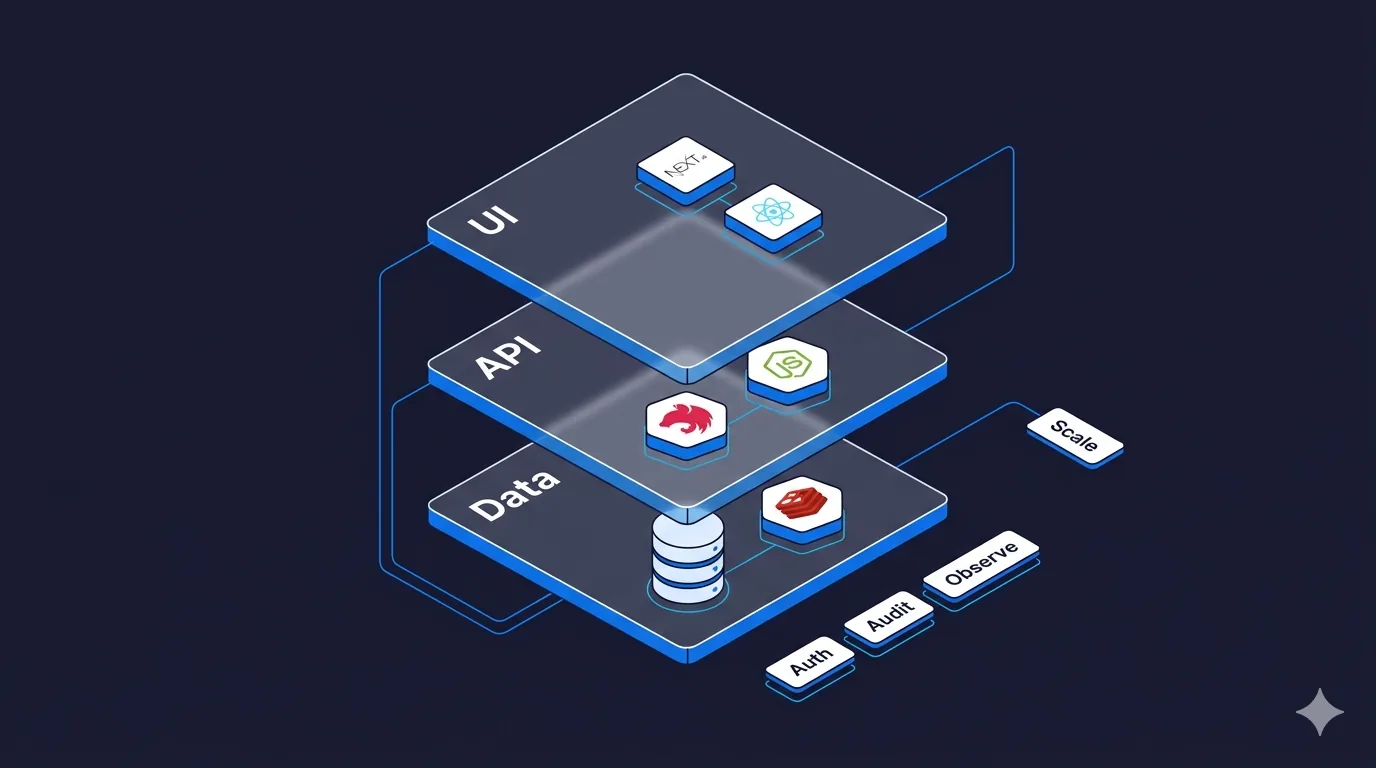
Enterprise Web Application Development in 2026: A Complete Guide
What enterprise web application development actually involves in 2026. Scope, architecture, tech stack, team shape, cost, timeline, security, and how to ship without getting burned.
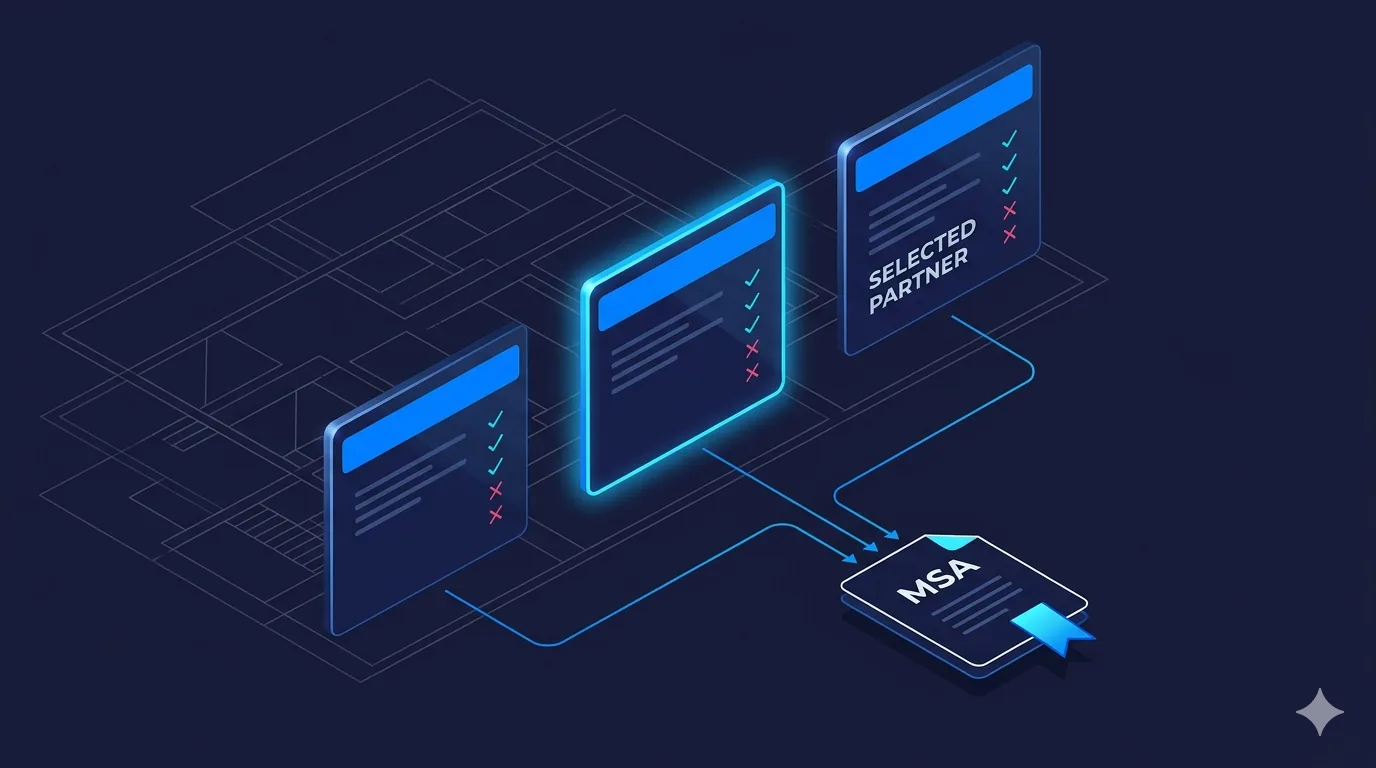
How to Outsource Enterprise Web Application Development (Without Getting Burned)
A practical playbook for outsourcing enterprise web application development in 2026: vendor selection, contracts, IP, milestones, and the red flags that predict failure.
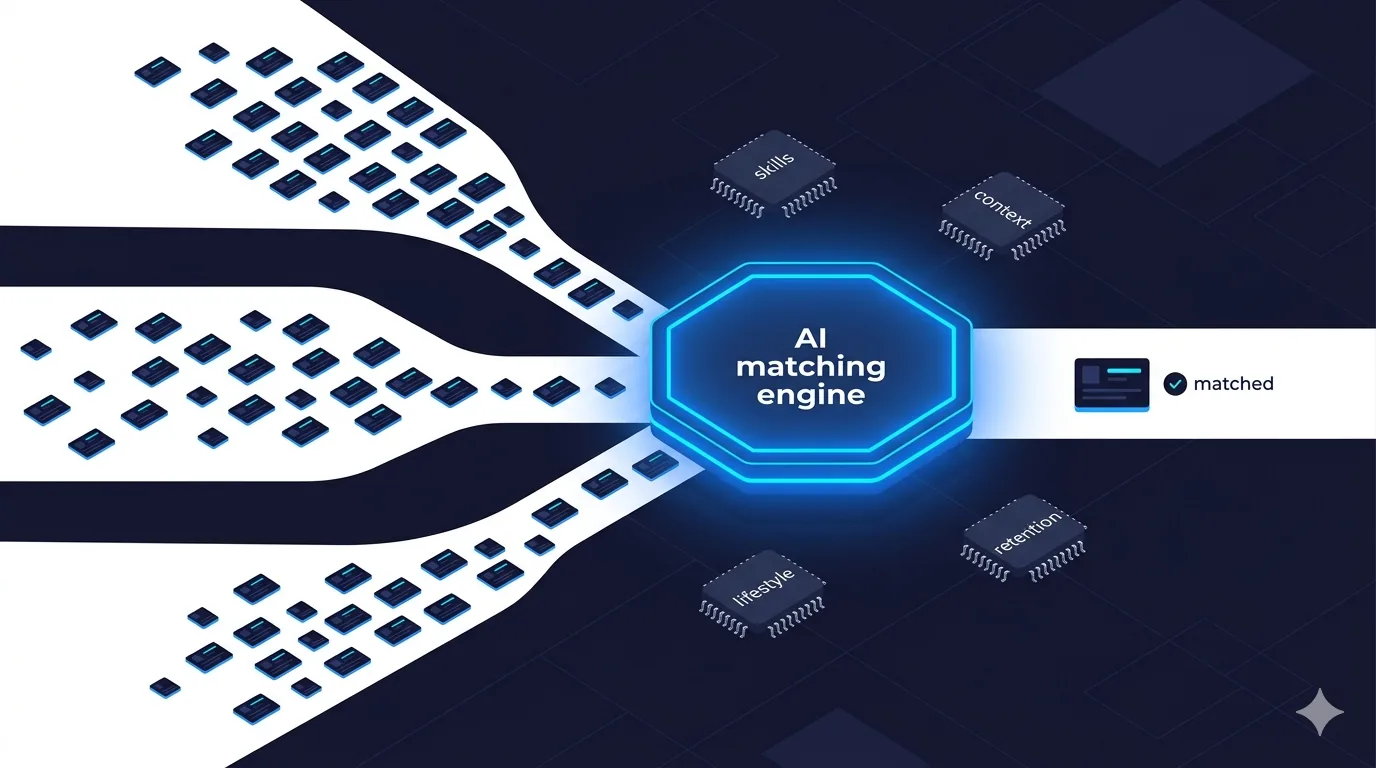
AI-Enabled Remote Staffing in 2026: A Complete Guide
What AI-enabled remote staffing actually does, where it wins over traditional hiring, where it falls short, and how to evaluate the major platforms in 2026.
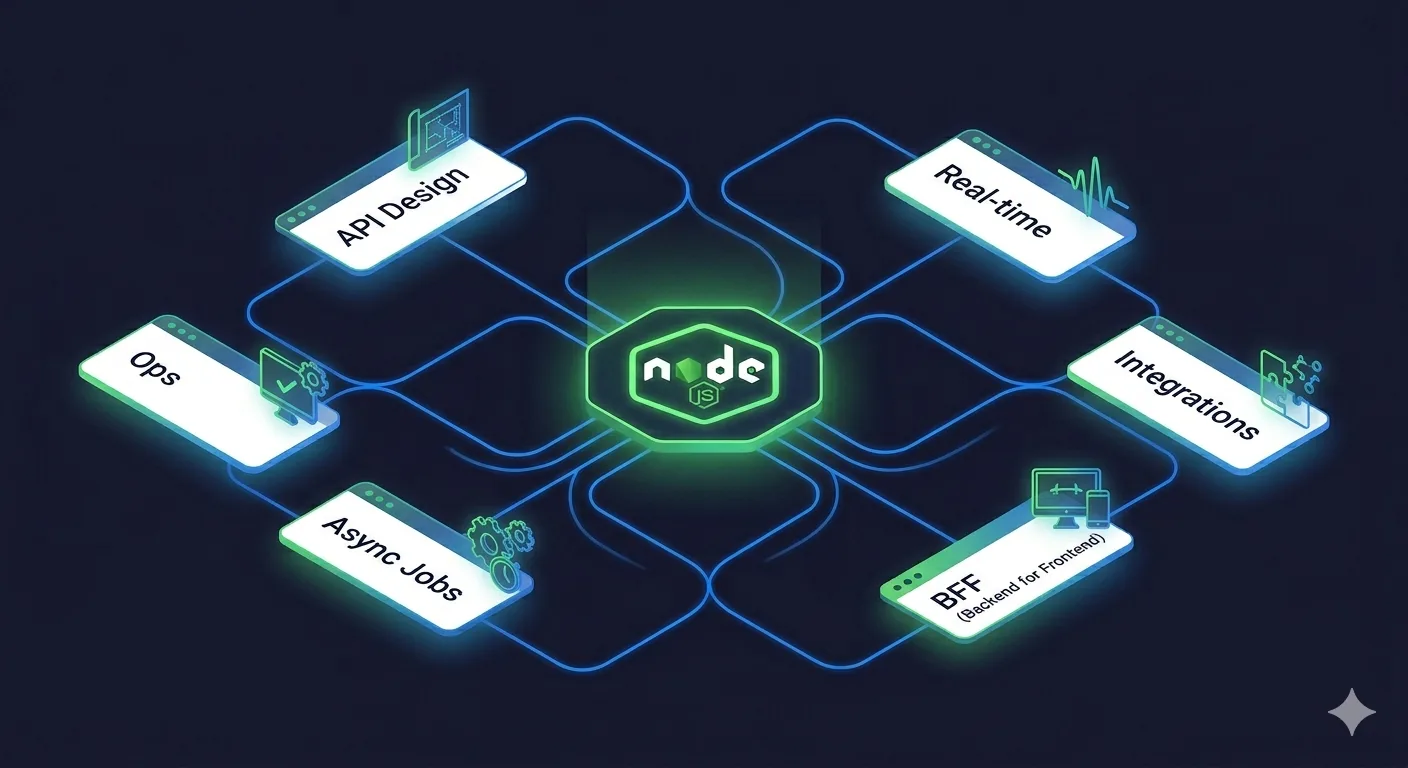
The Role of a Node.js Developer in Enterprise Applications (2026)
What enterprise Node.js developers actually do, day to day. APIs, real-time, BFFs, integrations, and the seniority ladder you should hire against.
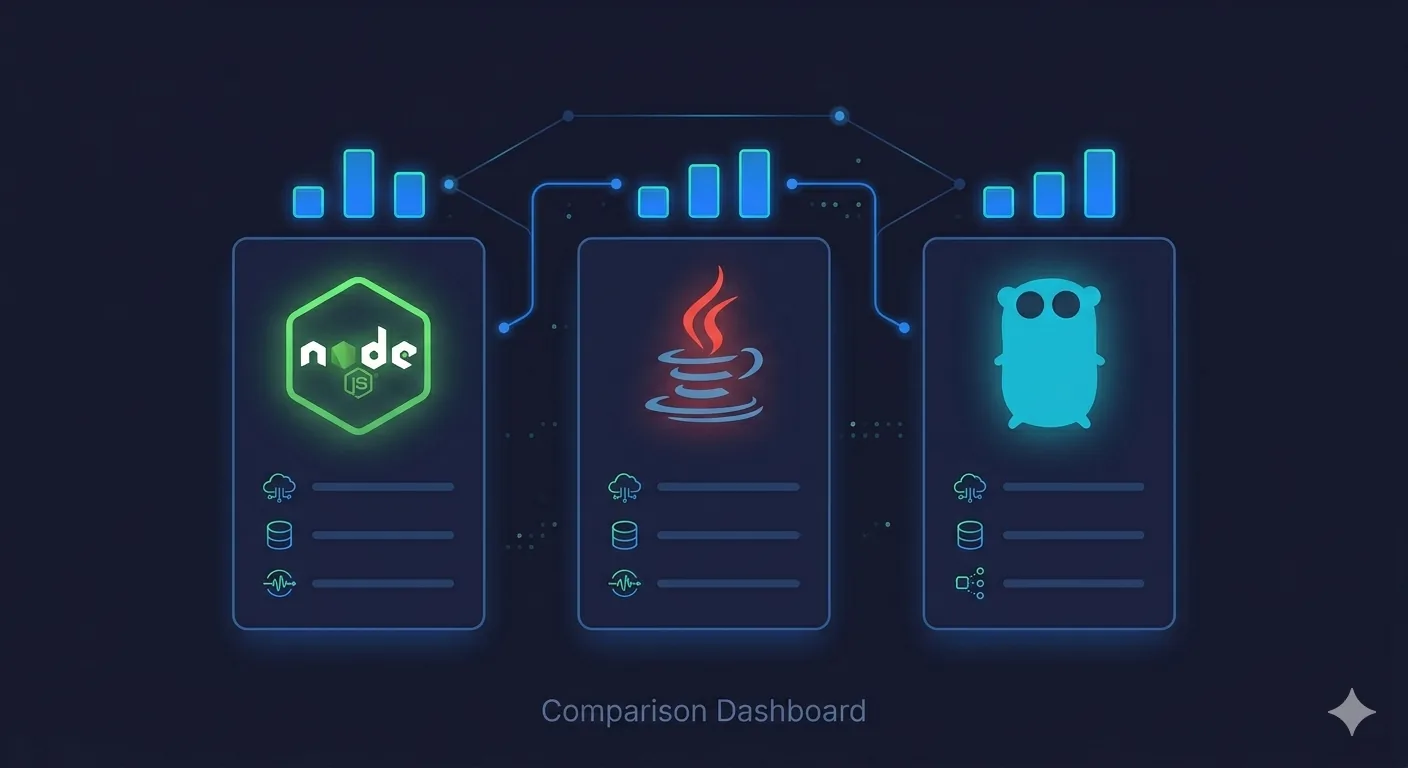
Node.js vs Java vs Go for Enterprise Backends (2026 Comparison)
Honest comparison of Node.js, Java, and Go for enterprise backend work in 2026. When each one wins, when the choice does not matter, and how teams actually decide.
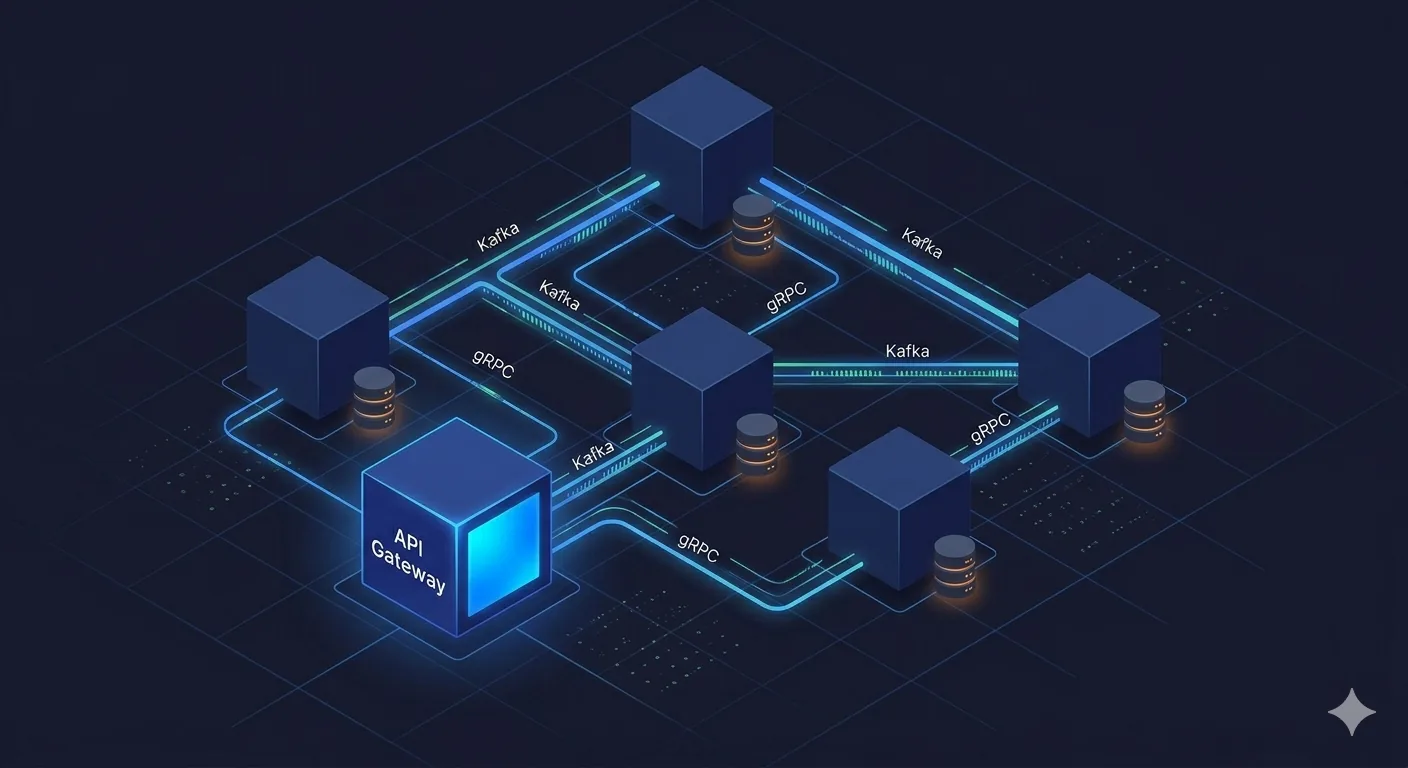
Node.js Microservices Architecture for Enterprise Teams (2026 Guide)
How to design Node.js microservices that hold up in production. NestJS, gRPC, message queues, observability, and the patterns that survive enterprise scale.
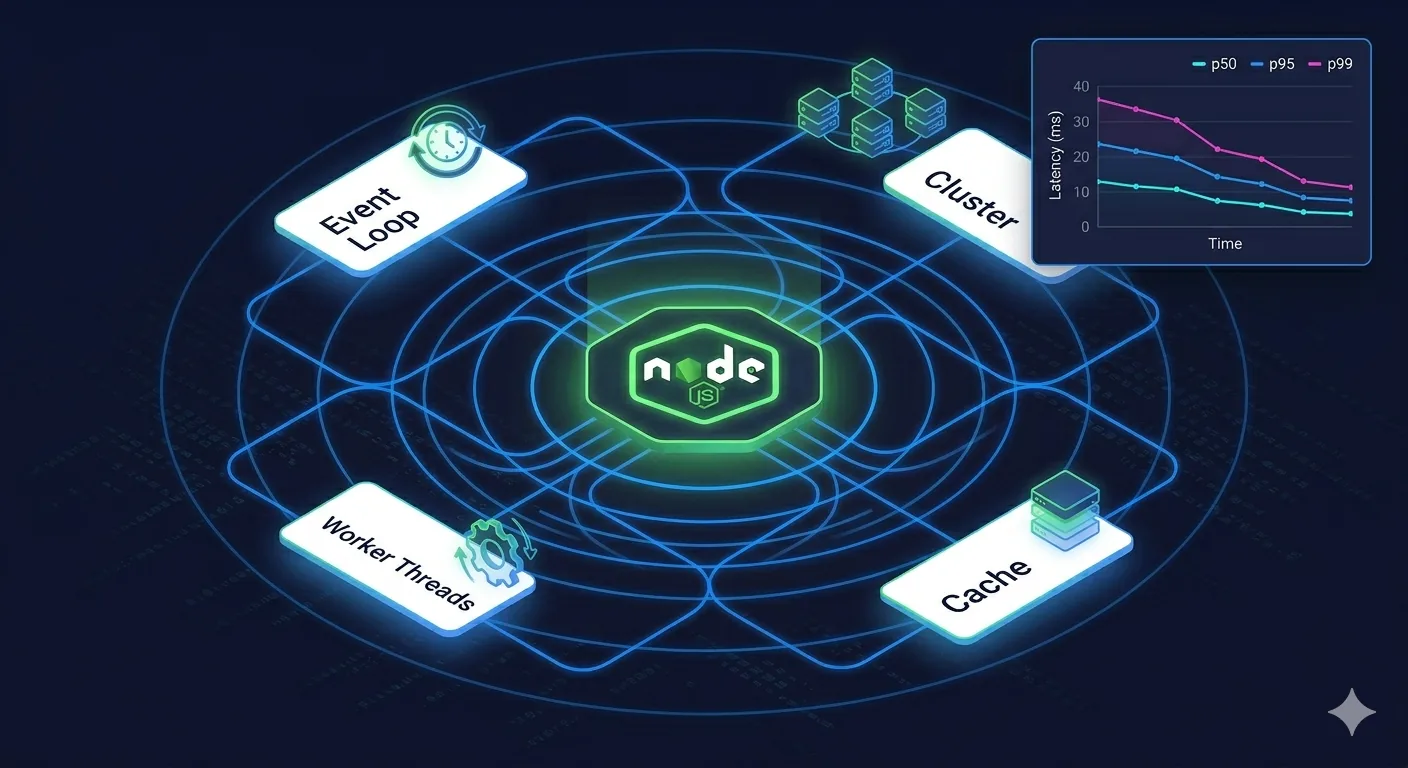
Node.js Performance and Scaling: A Production Checklist (2026)
Practical Node.js performance and scaling checklist for production. Event loop, clustering, worker threads, memory leaks, p99 latency, and the patterns that move the needle.
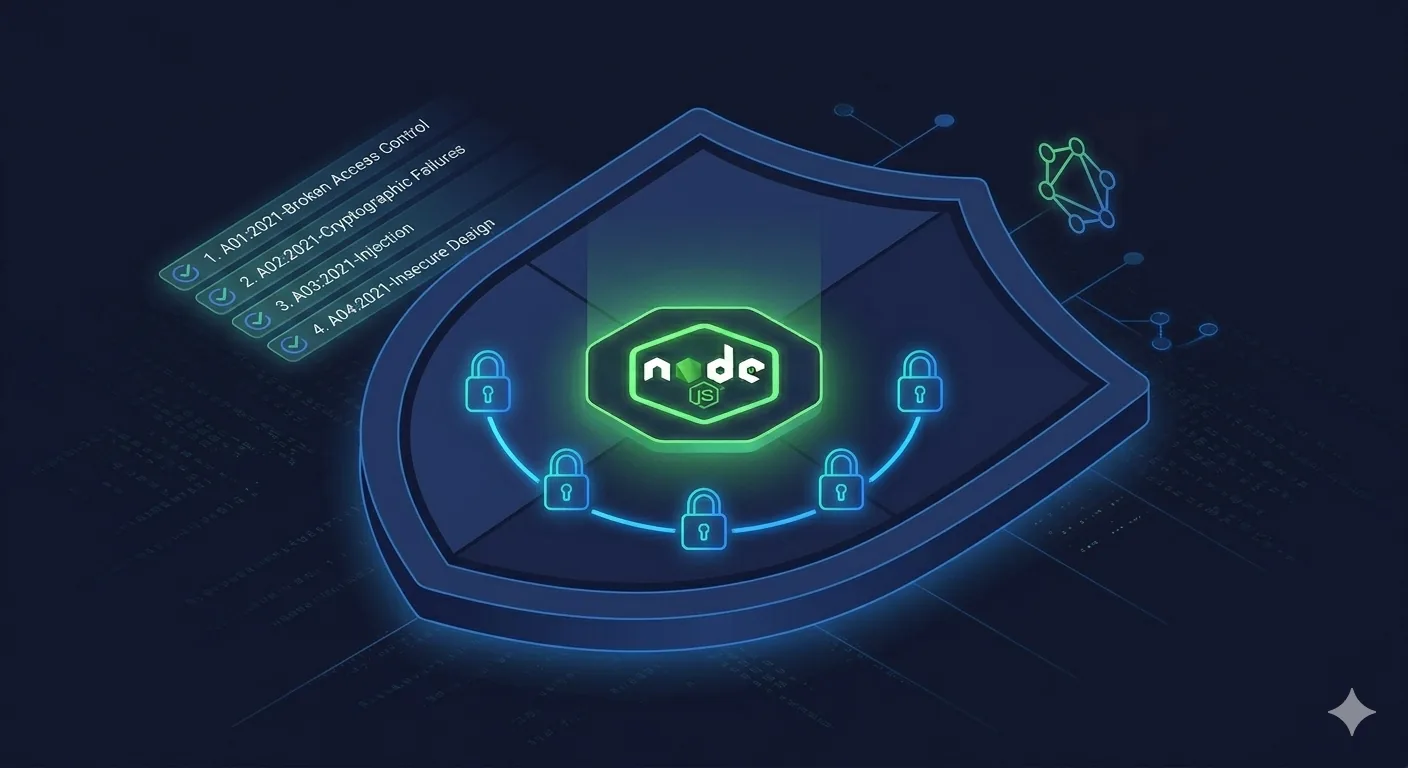
Node.js Security Checklist for Enterprise Teams (OWASP-Aligned, 2026)
OWASP-aligned Node.js security checklist for enterprise teams. Input validation, JWT pitfalls, prototype pollution, SSRF, npm supply chain, and the controls that actually matter.
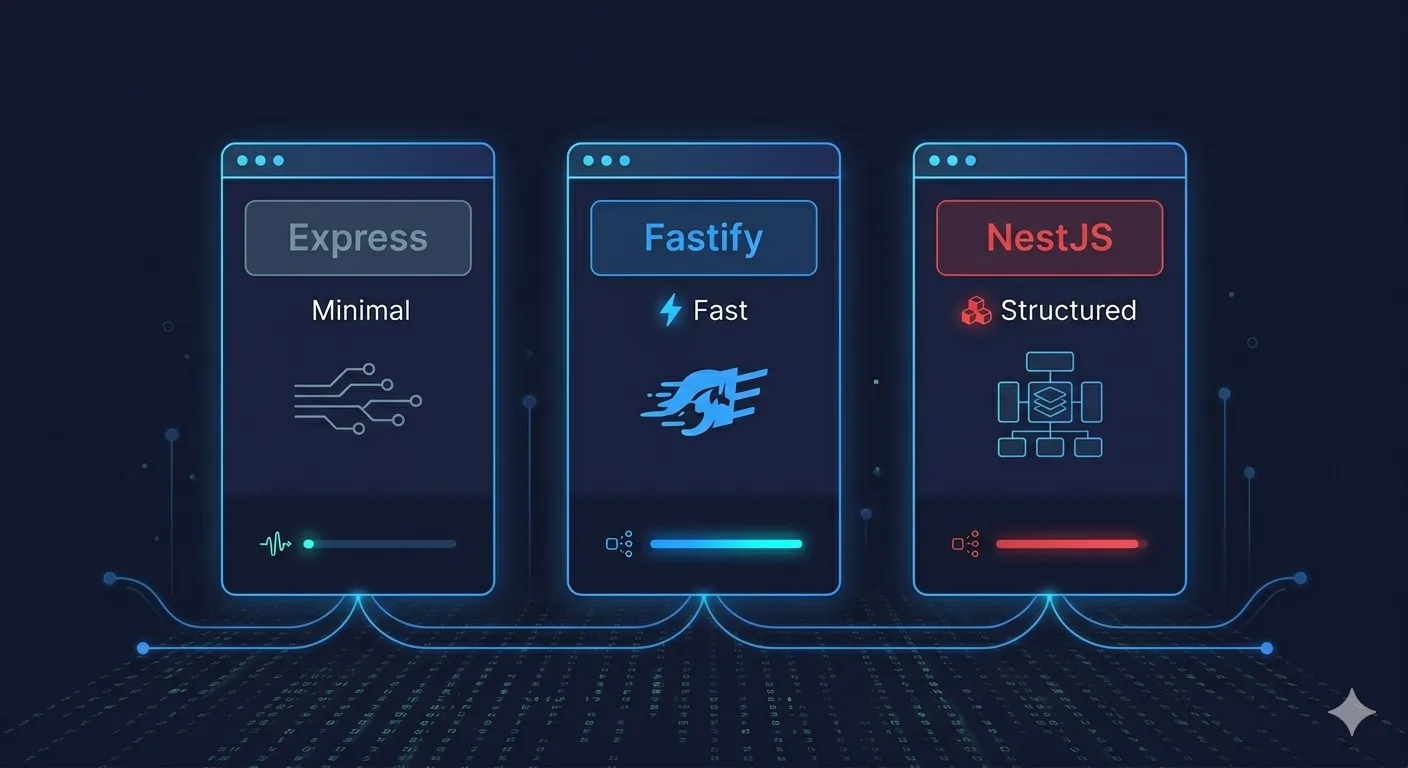
Express.js vs Fastify vs NestJS for Node.js Backends (2026 Comparison)
Honest comparison of Express, Fastify, and NestJS for Node.js backends in 2026. Performance, structure, hiring, ecosystem, and which one fits which kind of team.
Hire Node.js Developers from India in 2026 (Hiring Guide)
India offers Node.js developers at USD 5,500 to 8,500/month vs USD 15,000 to 20,000 in the US. Here's how to hire the right ones.
Hire React.js Developers from India in 2026 (Hiring Guide)
India offers React.js developers at USD 5,000 to 8,000/month vs USD 14,000 to 19,000 in the US. Here is what to screen for and how to hire the right ones.
Hire Mobile App Developers in 2026 (Cross-Platform Guide)
React Native, Flutter, or Kotlin Multiplatform: which one to hire for, what it costs from India, and how to screen senior cross-platform engineers.
Hire a Remote Mobile App Testing Team in 2026 (Pod Guide)
Mobile QA needs a pod, not a single tester. Here is the hiring loop, the right tools, the device-lab strategy, and 2026 cost benchmarks for India-based teams.
OWASP LLM Top 10: Implementation Checklist for 2026
Each OWASP LLM risk mapped to a concrete production mitigation, with US compliance ties to SOC 2, HIPAA, and SOX. Use as a release-readiness checklist.
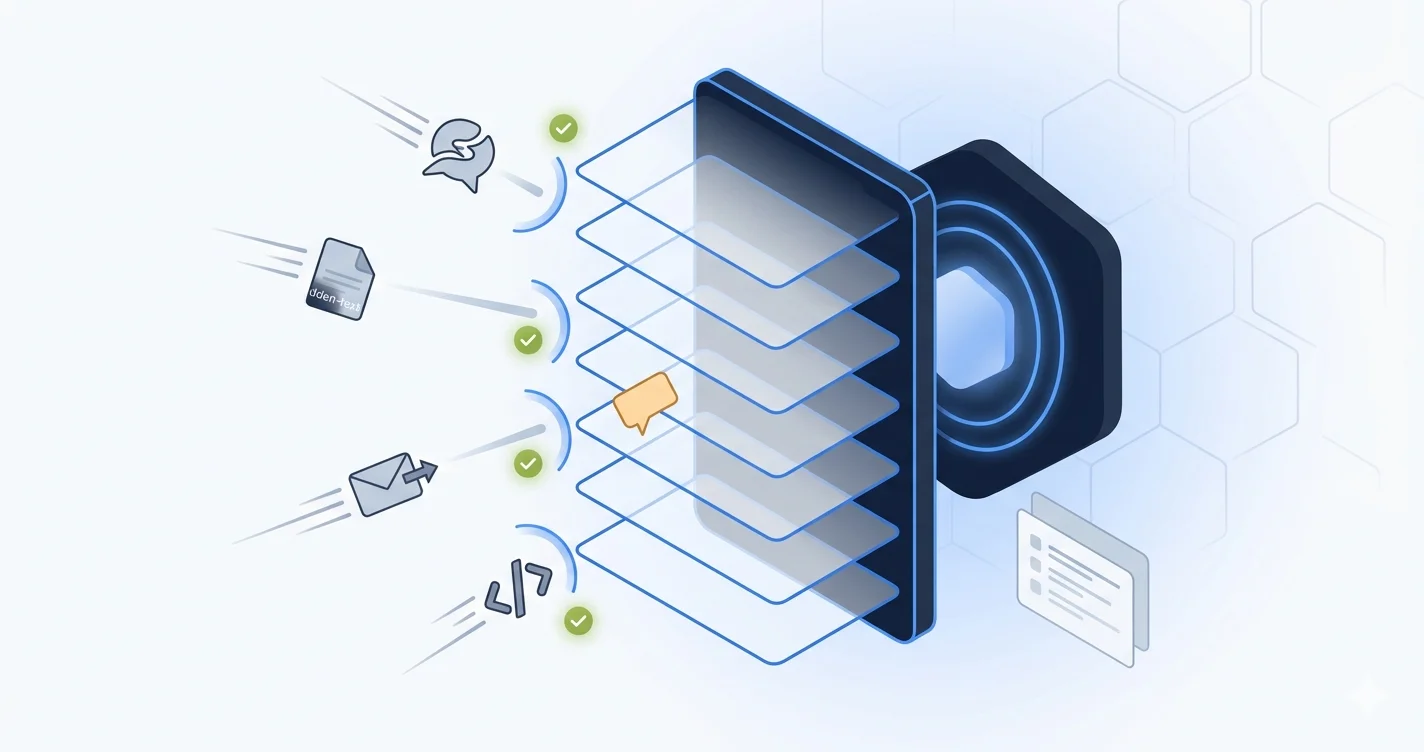
Prompt Injection Defense for Production LLM Apps in 2026
Direct and indirect prompt injection are the highest-impact LLM risk. Here is a layered defense pattern your team can ship before the next release.
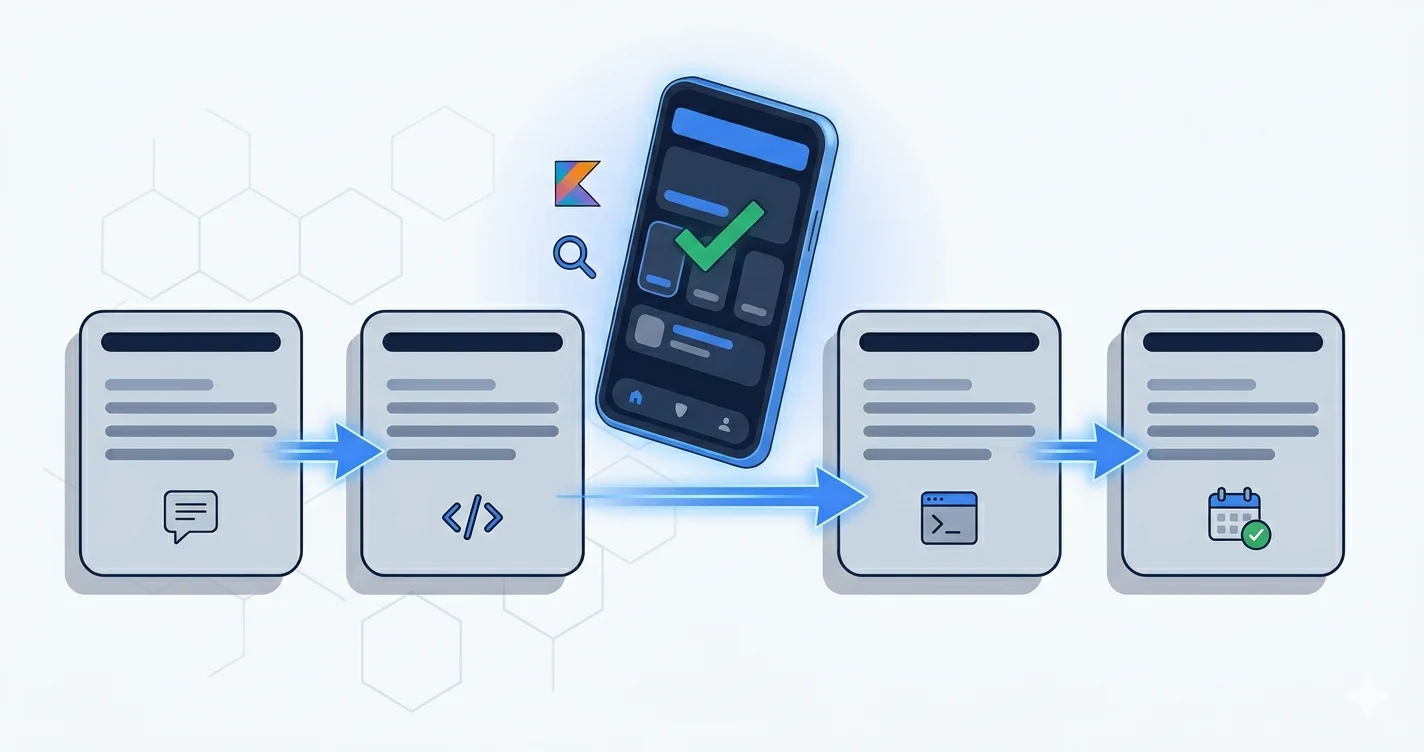
Android App Developer Hiring Guide 2026 (JD Template)
A 2026 Android developer job description leads with Kotlin and Jetpack Compose, demands Coroutines and Flow fluency, and treats Play Console delivery as a release-blocker skill. Here is the honest hiring guide, with a copy-paste JD template, screening framework, salary benchmarks, and the red flags that should disqualify a candidate.

Kotlin vs Java for Android in 2026 (The Honest Verdict)
Kotlin is the right default for Android in 2026. Java is the right call only for specific legacy and tooling cases. Here is the honest decision matrix, the migration math, and how to hire for each.
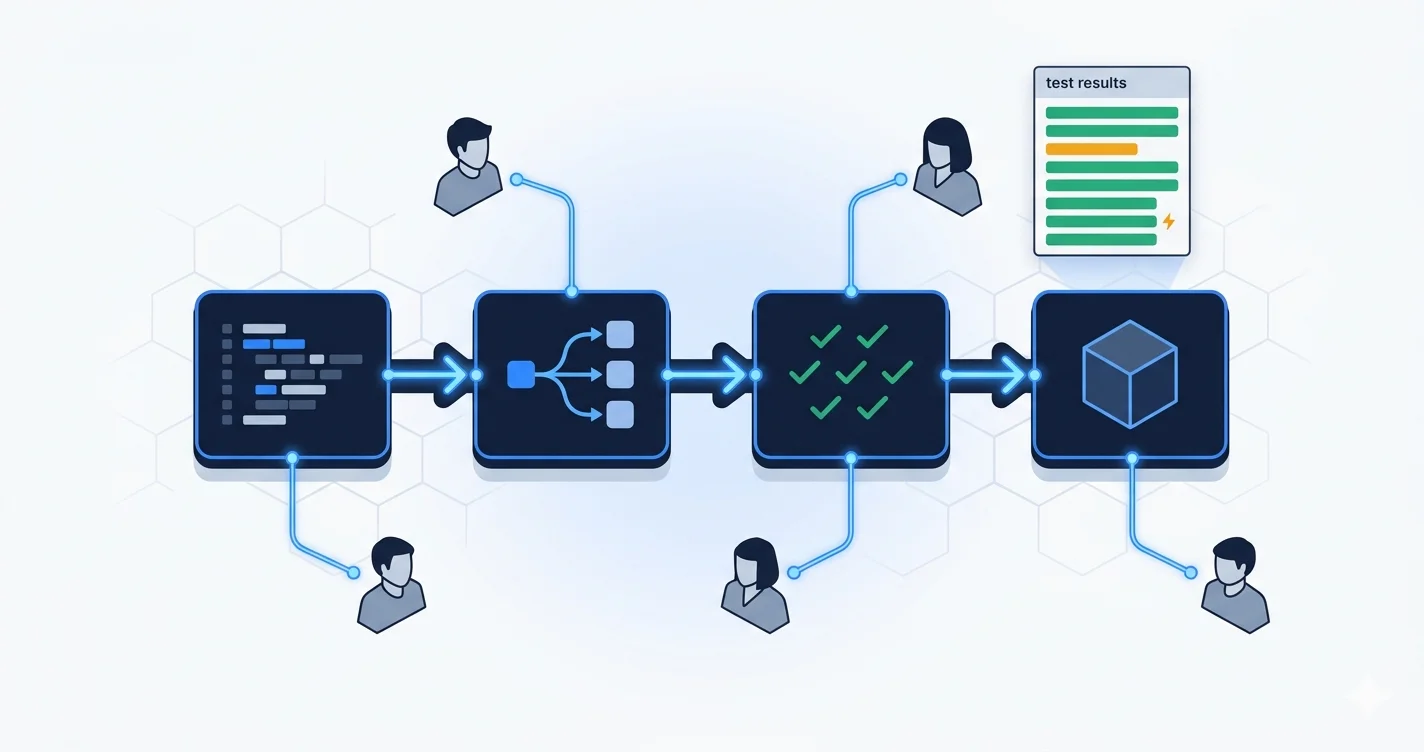
How to Hire a Software Testing Team in 2026 (Pod Guide)
Hire a software testing team rather than a single tester when the surface area is larger than one engineer can hold. Here is the pod-size math, the SDET vs manual mix, the engagement models, and how to budget for it.
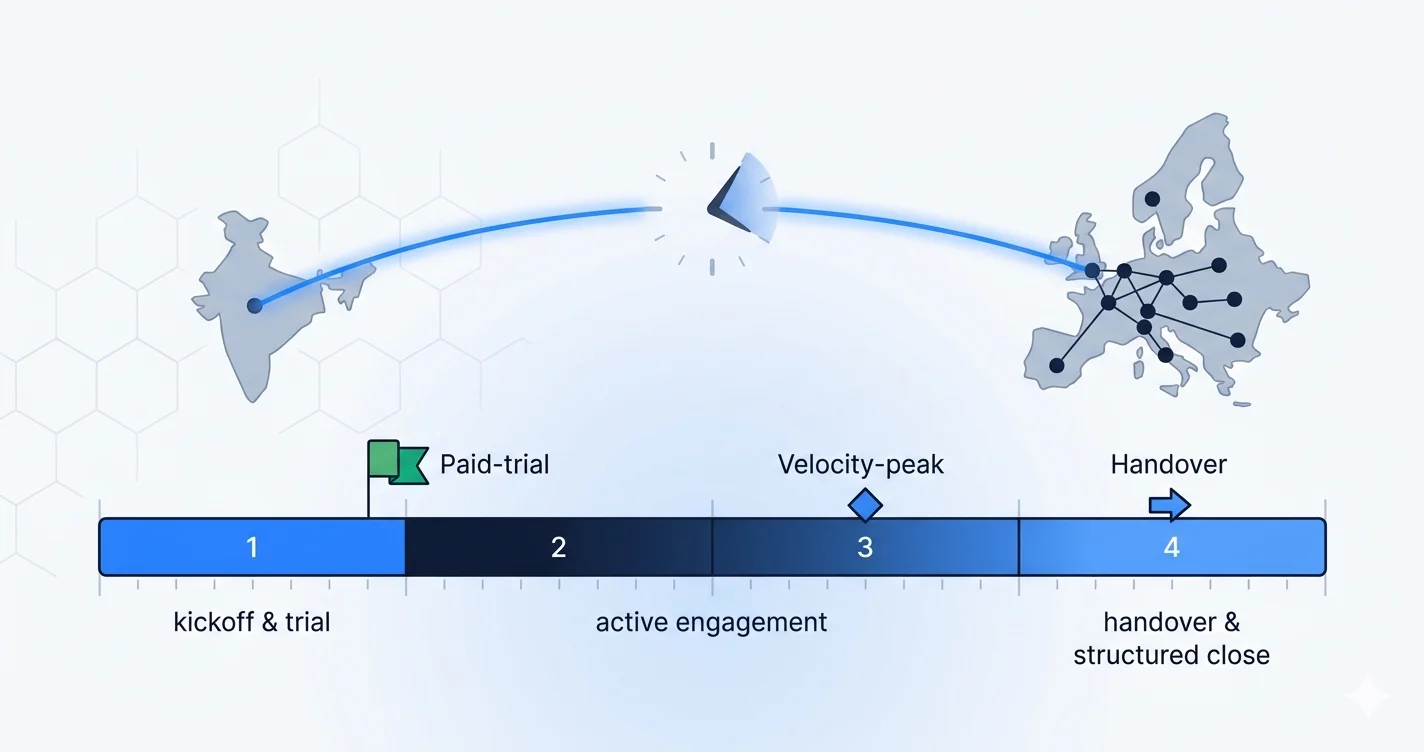
Short-Term Indian Developers for European Projects in 2026
Short-term Indian developer engagements (3 to 4 months) work better for European companies than the offshore conversation usually admits. Here is how the timezone, contract, and ramp math actually pencils out.
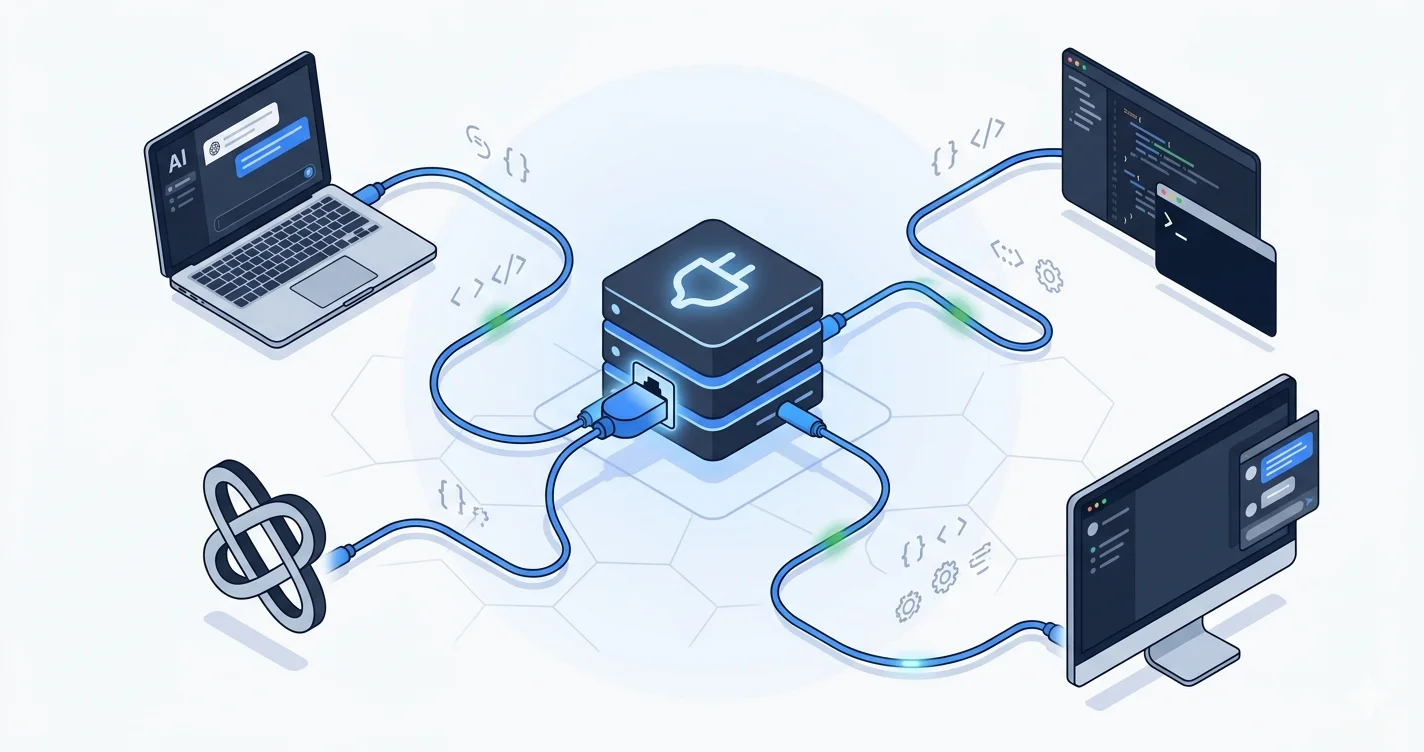
MCP Explained: How to Hire MCP Server Developers in 2026
MCP is the open protocol that lets Claude, Cursor, Windsurf, and agent frameworks call your tools and data through a single standard interface. Here is what MCP actually is, when to hire a dedicated MCP developer instead of a generalist AI engineer, what they cost, and how to screen for one.
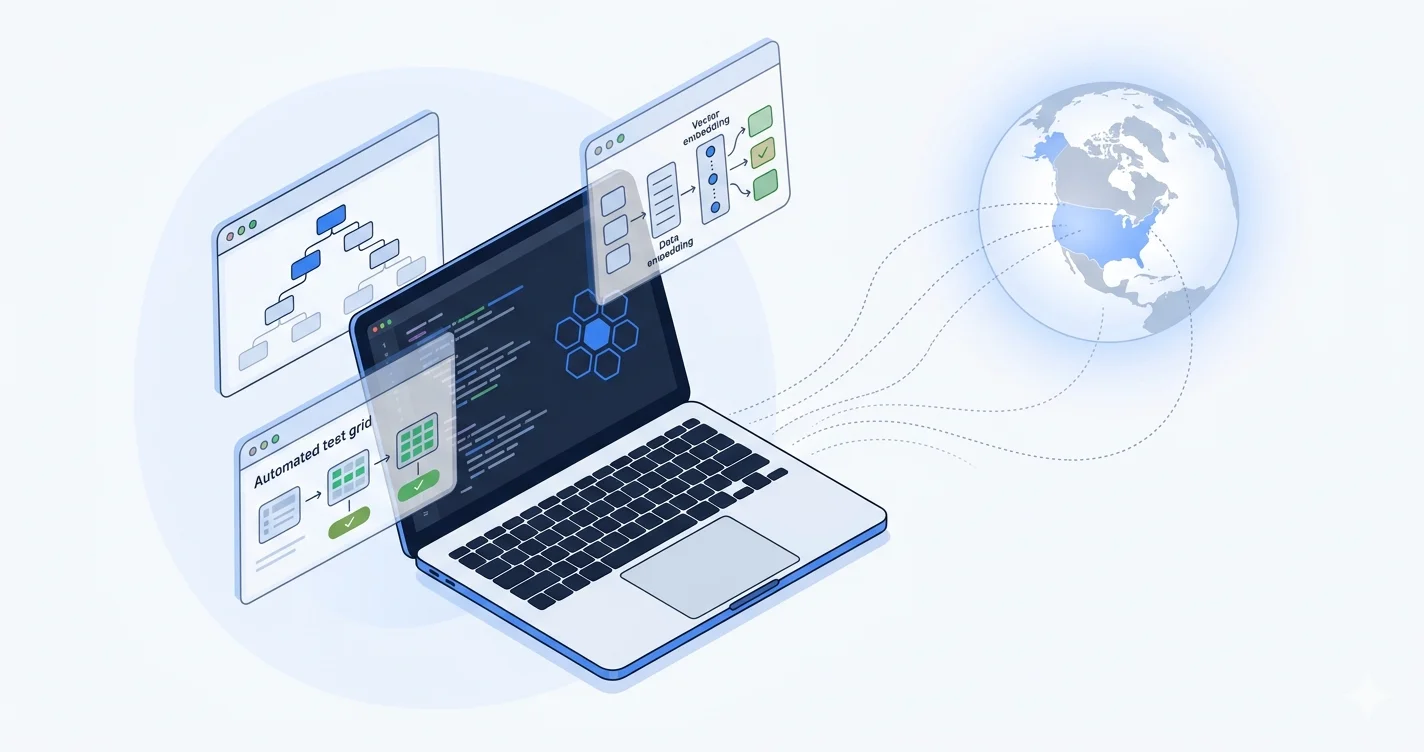
What Developers Do US Companies Outsource Most in 2026?
US companies in 2026 outsource four developer categories the most: Web and Mobile, DevOps and SRE, Data and AI, and QA automation. Here is what each pillar covers, the real cost gap that drives it, and where companies are hiring from.

What Should You Pay a Senior Indian Developer in 2026? (Real Numbers, Not Ranges)
A senior Indian developer in 2026 costs a foreign client between $5,500 and $9,000 per month all-in, depending on stack, city, and engagement model. Here is the full breakdown by level, by stack, what 'all-in' actually includes, and what changes the rate within a band.

How to Verify an Indian Developer's Real Experience: A 2026 Buyer's Checklist
A resume from an Indian developer rarely lies, but it almost always smooths the truth. This is the checklist a procurement-savvy VP of Engineering should run before signing any contract: documents, employment history, GitHub forensics, code samples, and reference calls. With concrete red flags for each step.
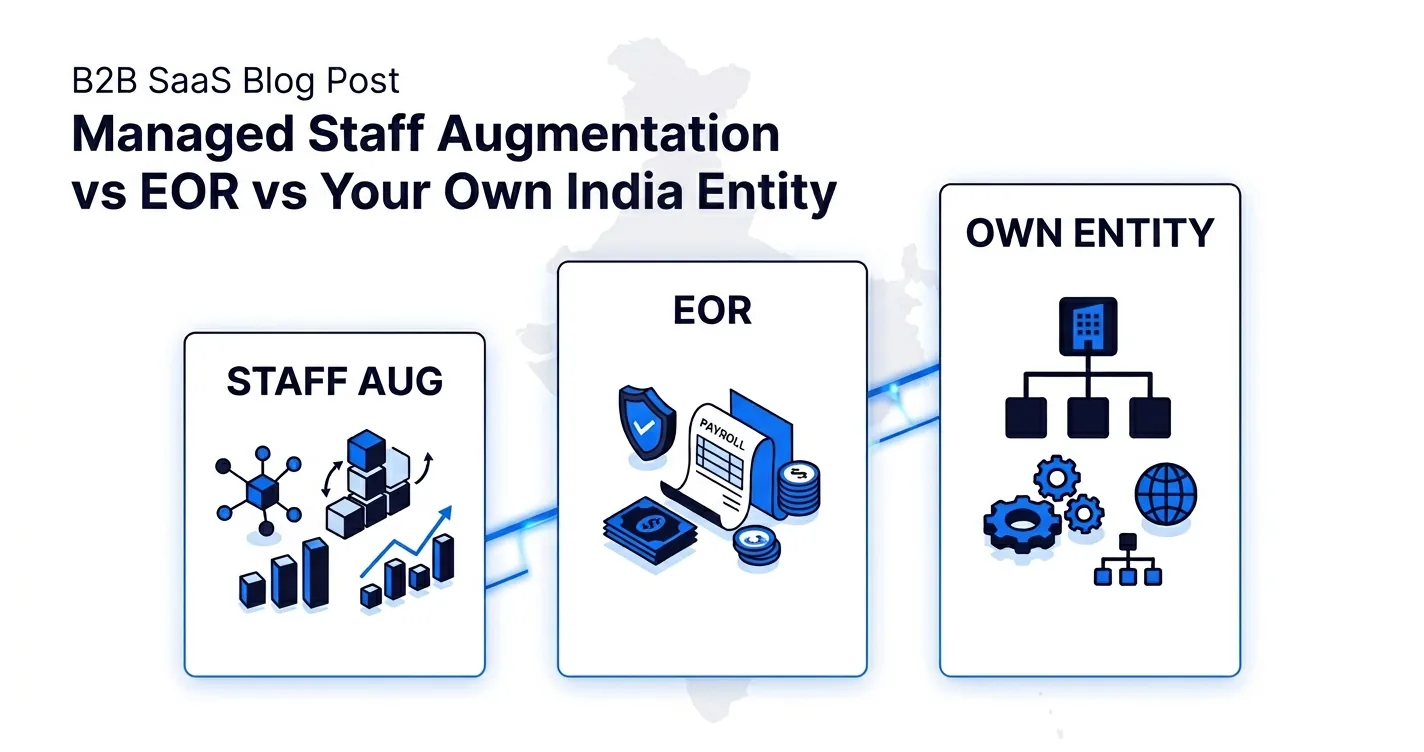
Managed Staff Augmentation vs EOR vs Your Own India Entity: Which Hiring Model Fits Your Stage?
Three ways to hire engineers in India in 2026: managed staff augmentation, an Employer of Record, or your own India entity. Each one solves a different problem. Here is a side-by-side breakdown of cost, time, IP, compliance, and the stage at which each model actually pays off.
Toptal vs Andela vs Turing vs WorkforceNext: An Honest Side-by-Side Comparison (2026)
Four very different ways to hire a remote developer in 2026. Toptal sells freelance access, Andela sells a managed roster, Turing sells AI-matched scale, WorkforceNext sells managed staff aug from India. Here is where each one wins, where each loses, and which fits which buyer.
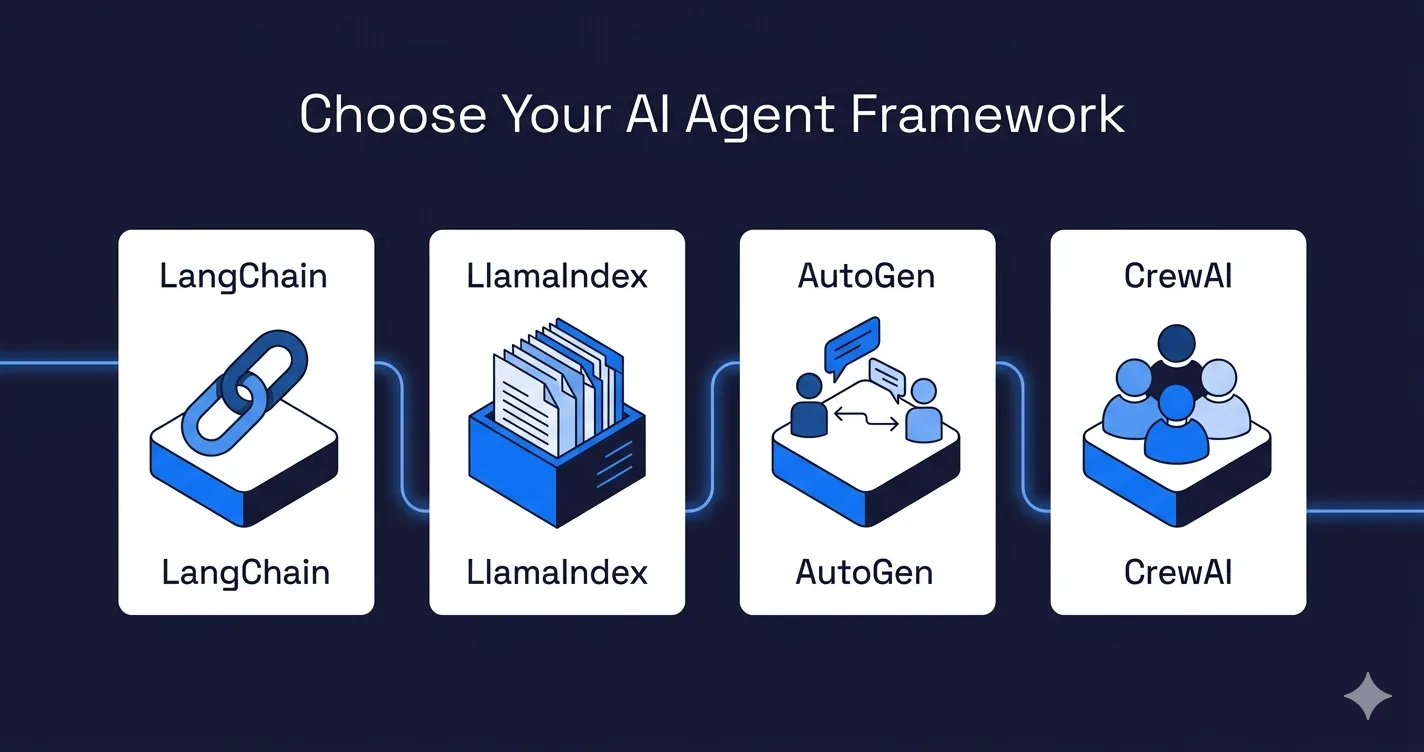
How to Choose an AI Agent Framework: LangChain, LlamaIndex, AutoGen, and CrewAI Compared
Picking the wrong AI agent framework silently burns a quarter of engineering time. Here is a direct decision guide for when to use LangChain, LlamaIndex, AutoGen, or CrewAI, and when to skip frameworks entirely.
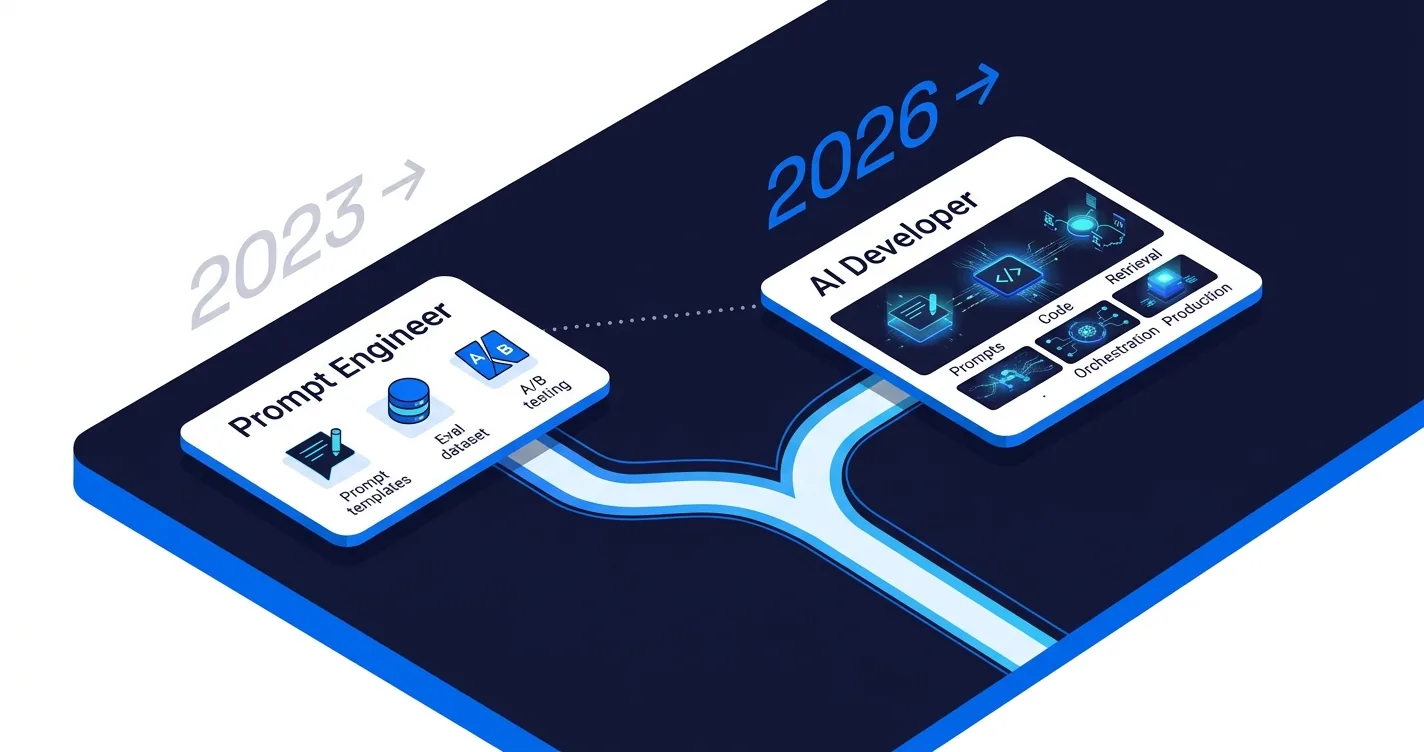
Do You Still Need a Prompt Engineer in 2026? (Or Has the Role Disappeared?)
Pure prompt engineer roles are rare in 2026. Here is when to hire one anyway, when an AI developer is the better call, and what the role actually costs now that the 2023 hype has cooled.
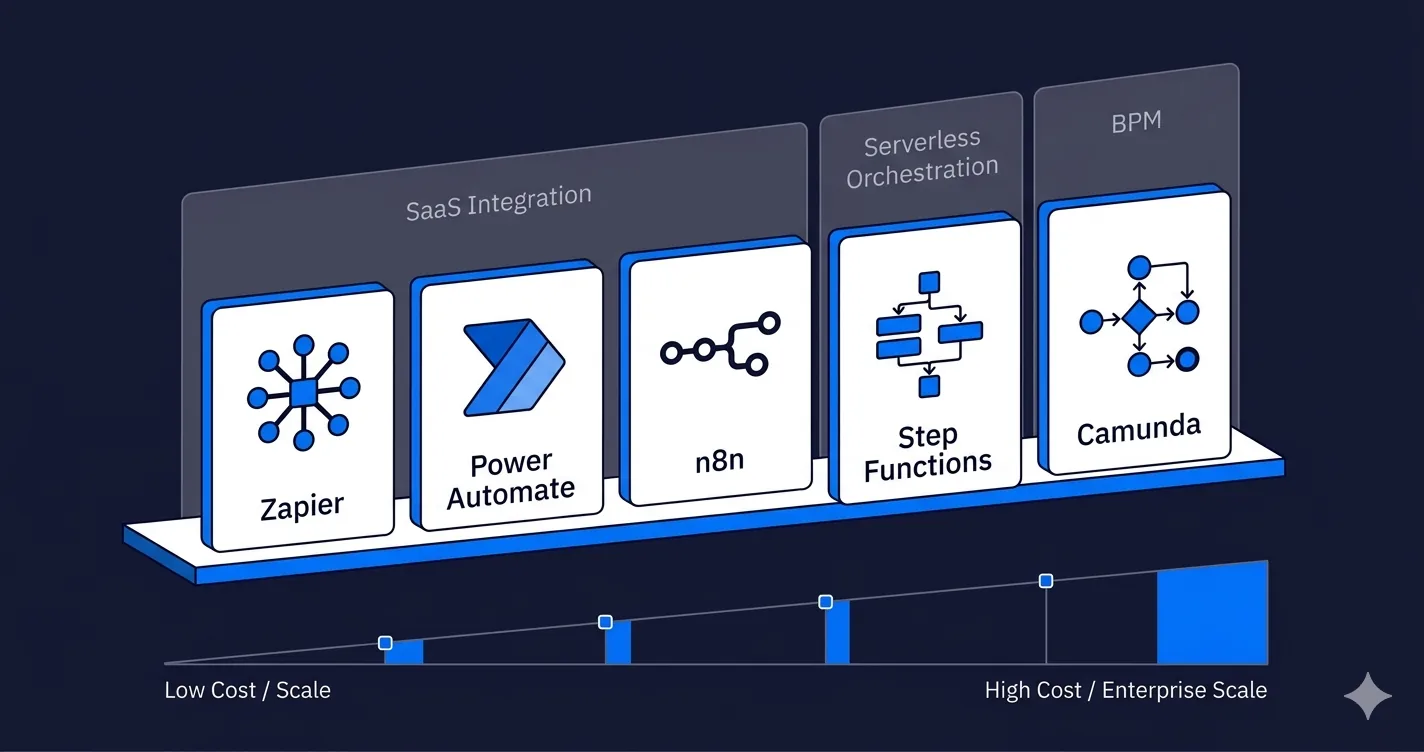
n8n vs Power Automate vs Step Functions vs Camunda vs Zapier: Which Workflow Tool to Choose in 2026
Five workflow automation tools compared on scale, 2026 pricing, and fit. Zapier, Power Automate, and n8n for SaaS integration. AWS Step Functions for serverless orchestration. Camunda for long-running business processes. A direct decision framework so you do not pick the wrong one and pay 10x.
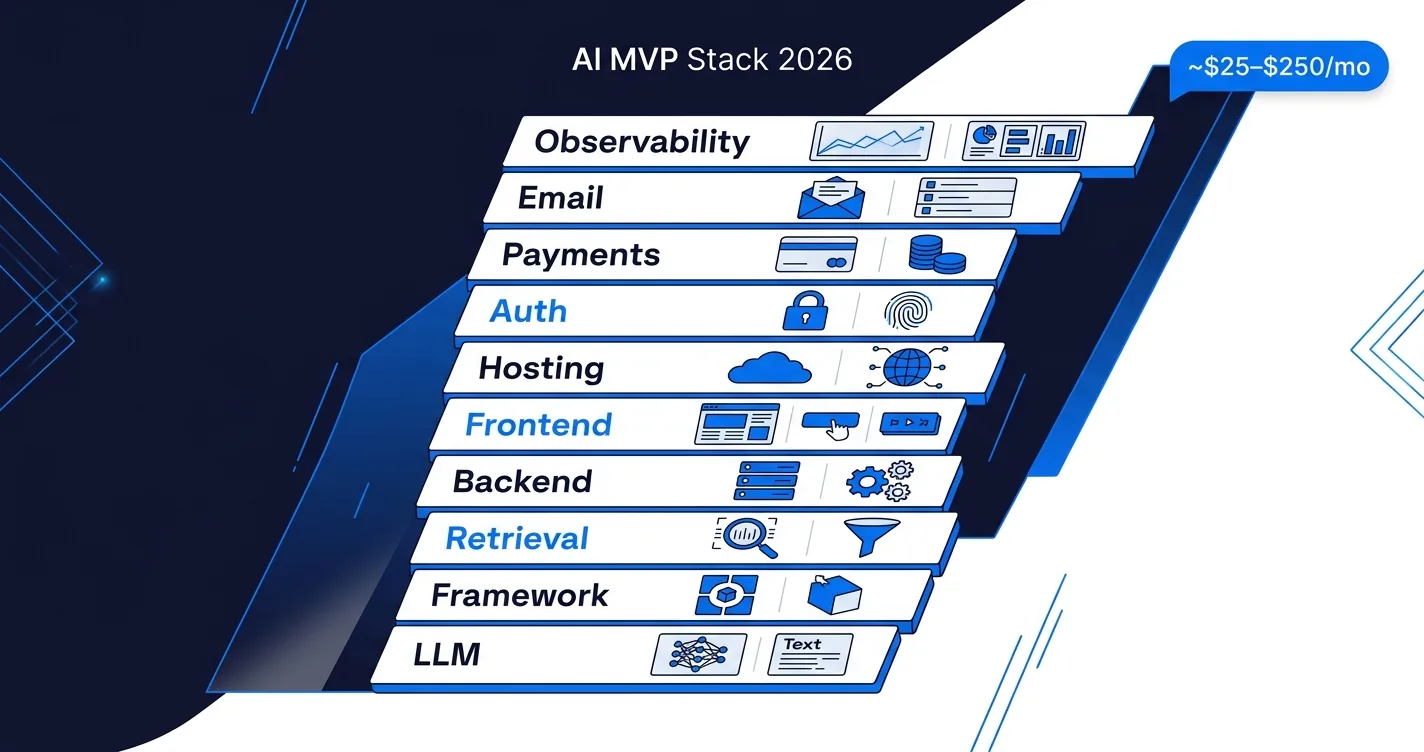
The AI MVP Tech Stack in 2026: What We Actually Ship With (and What We Skip)
The exact tool-by-tool stack we use to ship an AI MVP in 4 weeks. Clerk for auth, Stripe for payments, Resend for email, Supabase or Neon for Postgres, pgvector for retrieval, Vercel or Railway for hosting, Anthropic or OpenAI SDK direct. Total infra under $250 a month through the first 1,000 users.
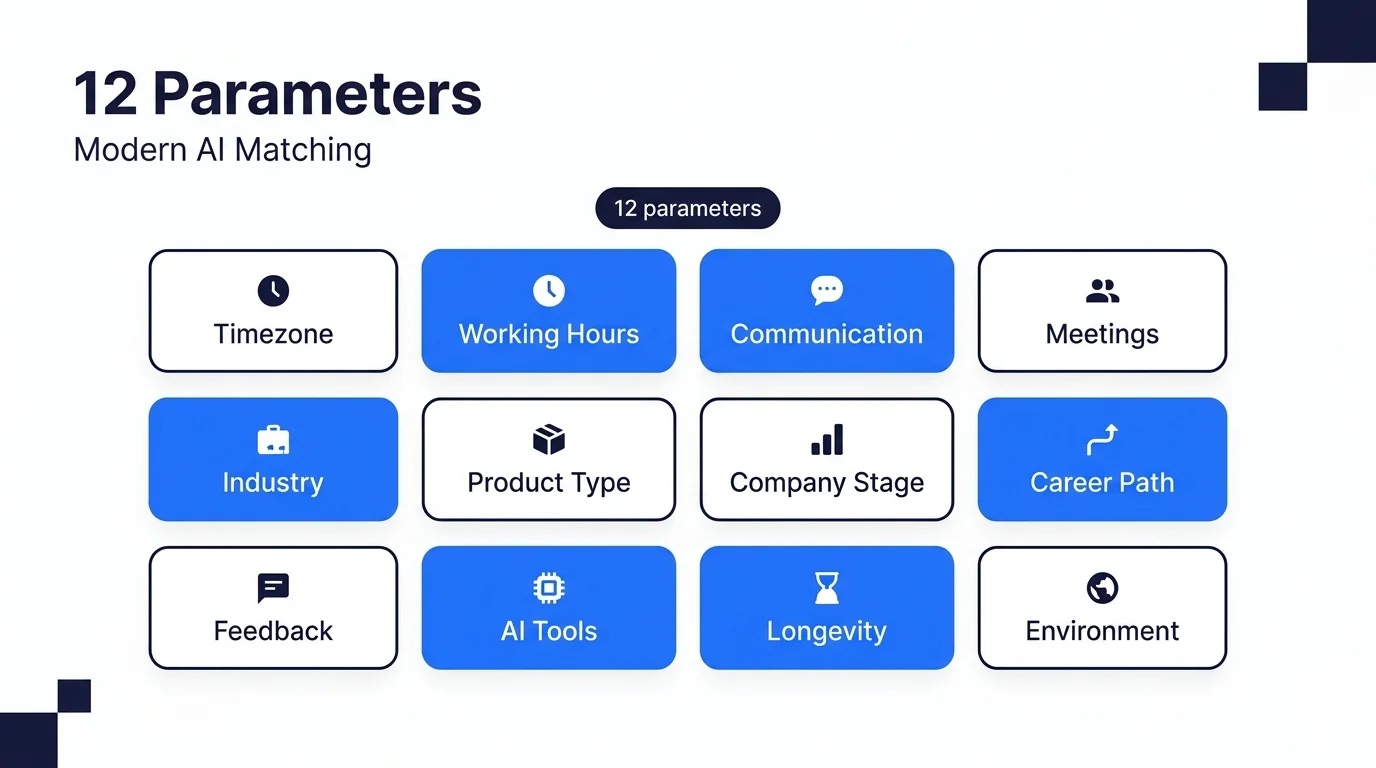
The 12 Parameters Modern AI Matching Tools Should Evaluate
Twelve parameters predict developer hiring success beyond technical skills. They cover working rhythm, context depth, career alignment, and environment. Here is each parameter, what it measures, and how to tell if a vendor actually measures it.
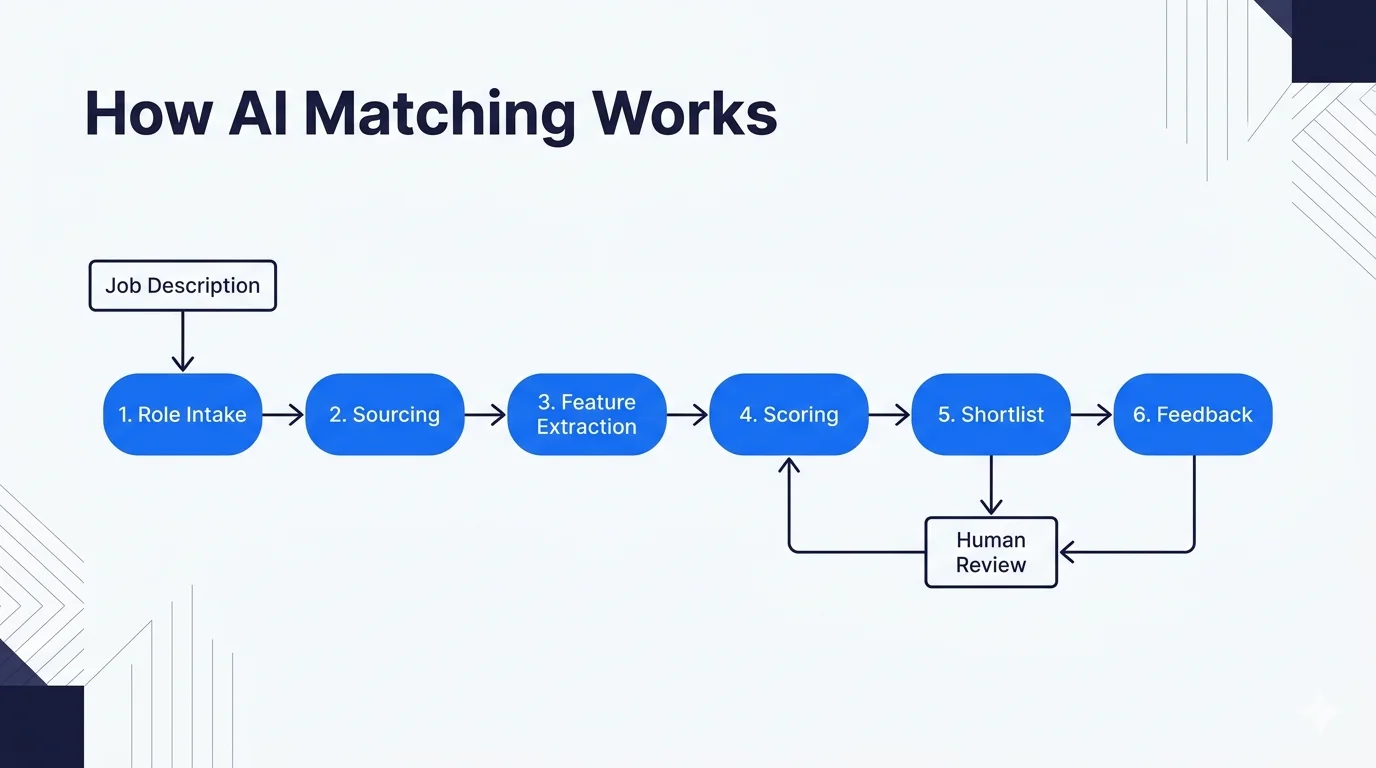
How Does AI Developer Matching Actually Work?
AI developer matching has two generations. Gen 1 parses resumes for skills. Gen 2 evaluates lifestyle and behavioral fit. Here is the step-by-step pipeline each uses, where each one breaks, and how to tell them apart.
The 11 Best AI Developer Matching Tools in 2026 (Honestly Ranked)
An honest, criteria-based ranking of 11 AI-powered developer matching platforms in 2026. What each tool does well, where it falls short, and which buyer each one actually serves.
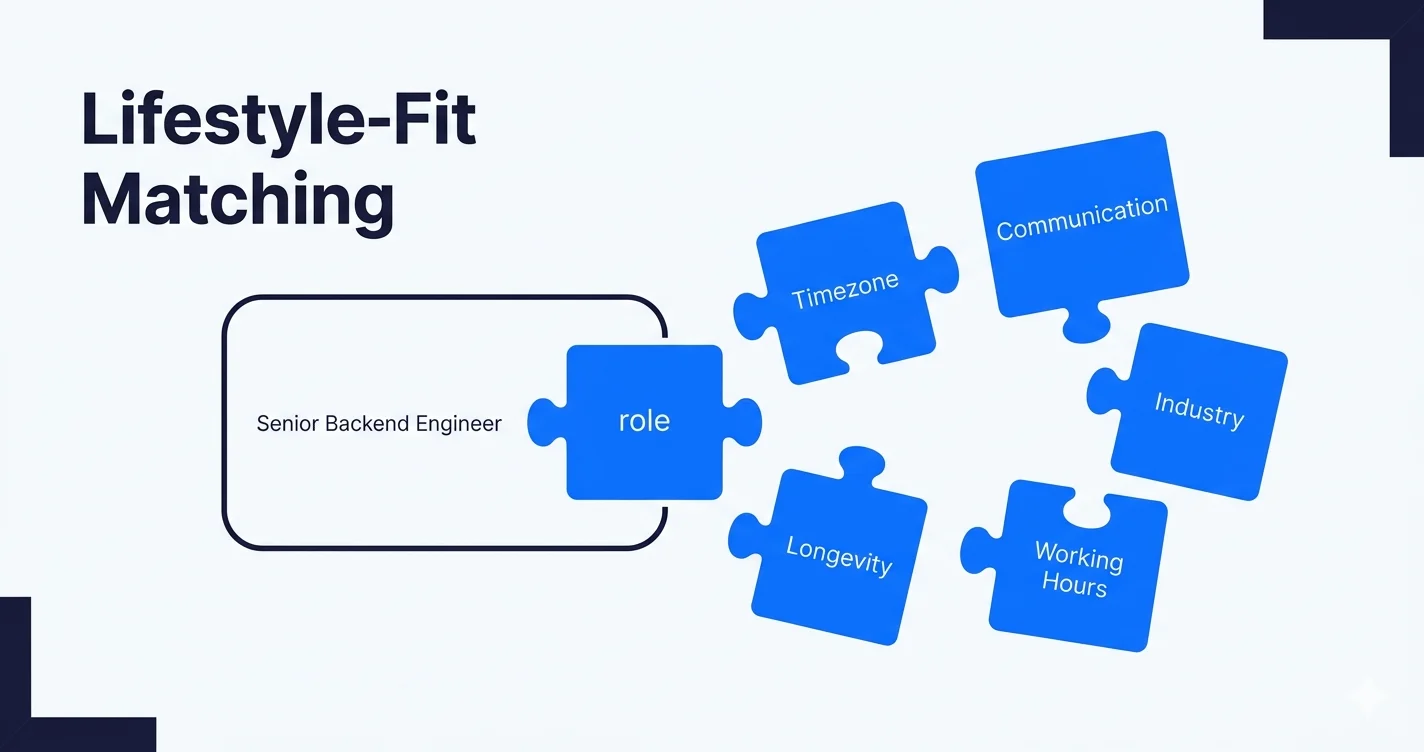
What Is Lifestyle-Fit Matching in Developer Hiring?
Lifestyle-fit matching evaluates developers across timezone, communication style, working hours, and career goals, not just technical skills. Here is what it means, why skills-only AI matching keeps failing, and the 12 parameters that actually predict a good hire.

AI Developer Interview Questions: What to Actually Ask (and What to Skip)
Most AI developer interviews test memorized trivia. Here are the questions that actually reveal whether a candidate can ship a working product.
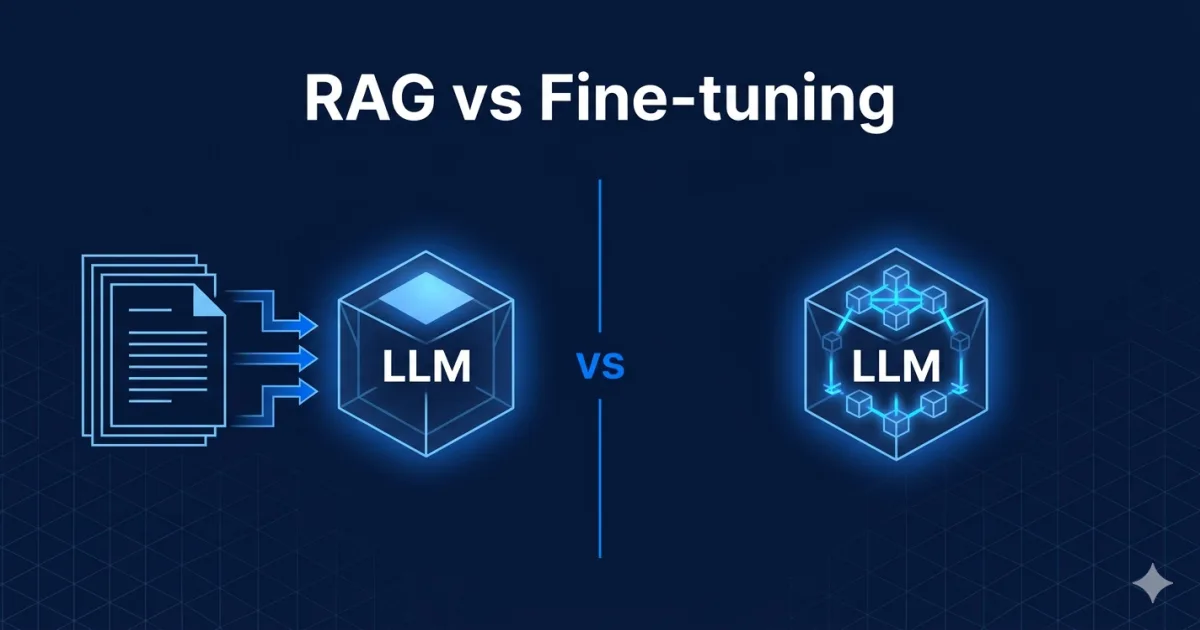
RAG vs Fine-tuning for Enterprise: When to Use Which
RAG and fine-tuning solve different problems. Here is how to decide which one (or both) fits your use case, without wasting 3 months finding out the hard way.

Why Offshore Developers Keep Leaving and 3 Things That Make Them Stay
Most offshore teams reset context every few months. Here is why developers leave and what actually works to keep them.

Vibe Coding Explained: When to Use It and When to Avoid It
AI-assisted coding is changing how software gets built. Here is an honest breakdown of when vibe coding works and when it will hurt you.

Context-First Matching: Why Tech Stack Alone Is Not Enough to Hire Good Developers
A Java developer who built banking systems is a completely different hire than one who built logistics software. Here is why context matters more than stack.

The Real Cost of Switching Tech Partners (It Is Way More Than You Think)
Switching your offshore team feels like a fresh start. But the hidden costs add up to months of lost progress. Here is the full breakdown.

How to Build an AI MVP in 4 Weeks with an Offshore Developer
You have an AI product idea and limited budget. Here is a practical guide to shipping a working MVP in 4 weeks with one dedicated developer from India.

Dedicated Developer vs Freelancer vs Agency: The Real Total Cost of Ownership
The hourly rate is just the beginning. Here is an honest comparison of what you actually end up paying for each model over 12 months.
Frequently asked questions about hiring Indian developers
How much does a senior developer from India cost in 2026?
Senior Indian developers cost USD 5,000 to 8,500 per month all-in (salary, benefits, equipment, and partner team management). Fully loaded equivalent in the US runs USD 14,000 to 19,000 per month, or USD 220,000 to 290,000 per year. The 60 to 70% cost delta is geography, not a quality gap.
How long does it take to hire a dedicated developer from India?
With a vetted partner, expect three to five matched profiles within 5 business days, paid trials starting in week 2, and a confirmed hire by week 3 or 4. Going direct on LinkedIn or job boards typically takes 8 to 12 weeks, most of which is filtering noise.
What time zones do Indian developers work in?
India Standard Time is UTC+5:30. That gives a 4 to 5 hour overlap with the UK and continental Europe, a 2 to 3 hour overlap with the US East Coast morning, and a 5 hour overlap with Sydney afternoon. Most teams run a daily standup at 9 AM your time and let engineers async the rest of the day.
Dedicated developer or freelancer for ongoing product work?
For continuous product work, dedicated developers beat freelancers on quality, accountability, and continuity. Freelancers fit short fixed-scope projects. The total-cost-of-ownership comparison (including ramp-up, churn, and rework) usually puts a dedicated India developer at lower true cost than a US freelancer.
Can I hire developers from India for a short-term project?
Yes. Useful engagements start at four to eight weeks; below that, ramp-up overhead outweighs throughput. We run short-term engagements regularly for European clients on production deadlines, where the timezone overlap with India makes async delivery practical.
What roles do you most commonly staff from India in 2026?
Backend (Node.js, Python, Go), frontend (React.js, Next.js, TypeScript), mobile (React Native, Flutter, native iOS, native Android), AI engineering (RAG, LangChain, MCP, vector databases), DevOps and SRE, and QA automation (Playwright, Cypress, Appium, Maestro). Each role has its own pillar page and most have a hiring guide blog post.